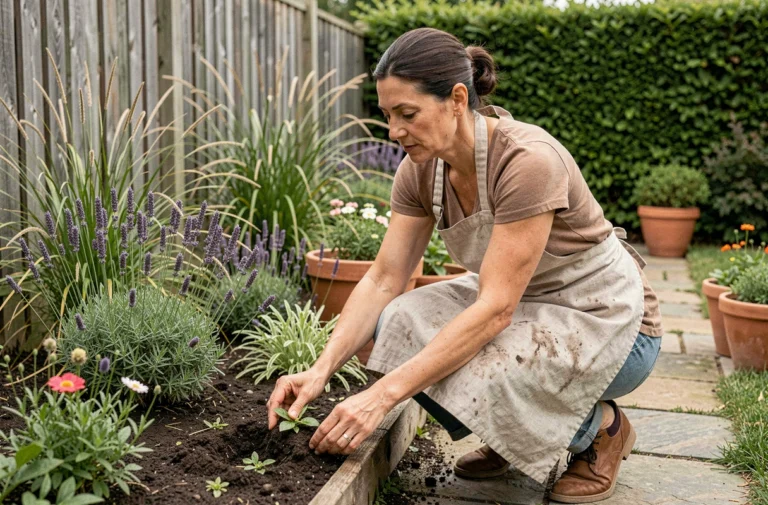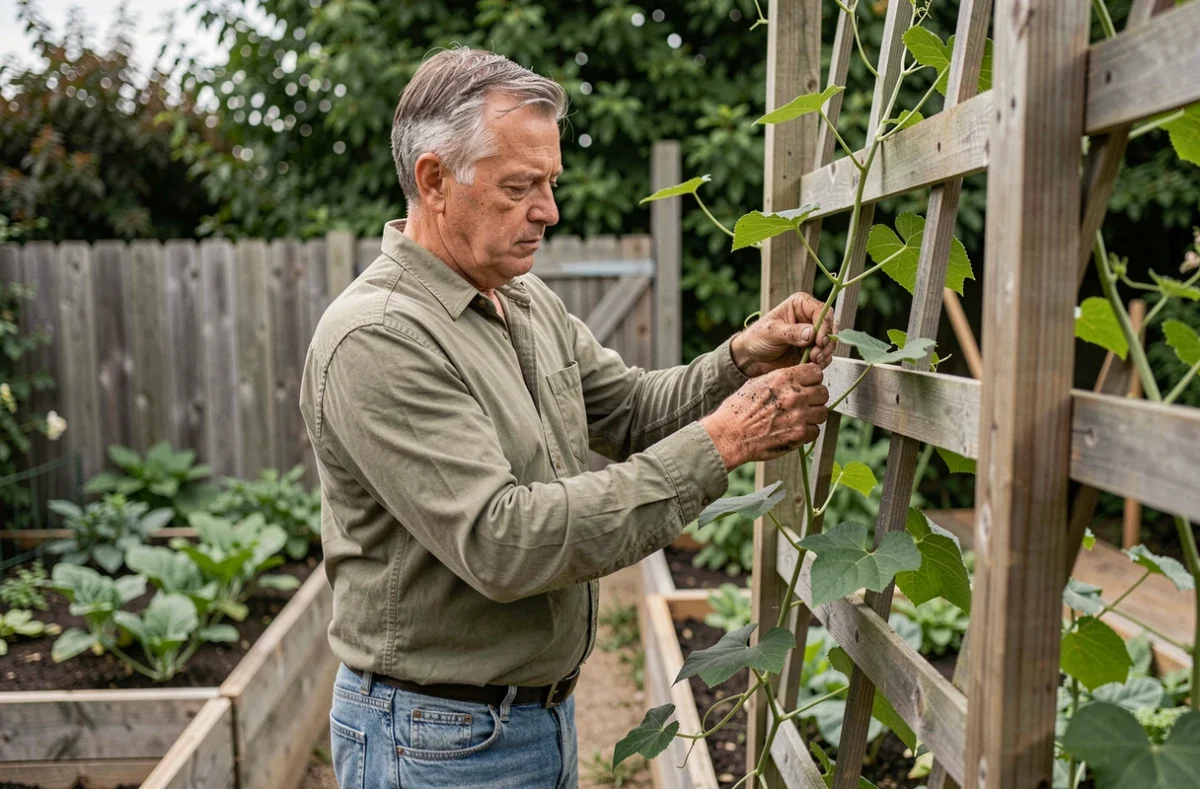
The kiwi (actinidia) is a vigorous vine that produces dense foliage and heavy fruits for many years. Planting a seedling without suitable support exposes you to broken branches, ground-level harvests, and an unmanageable plant. The choice of support or stake for your kiwi determines the health of the plant as much as the quantity of fruits harvested.
Wood usage class: the criterion that gardeners overlook
Have you ever seen a fence post rot at its base in two or three seasons? The same problem threatens untreated wooden kiwi stakes. The buried part remains in constant contact with soil moisture, an environment conducive to fungi and wood-eating insects.
Technical references on wood usage classes distinguish several levels of resistance. A buried post must be in class 4, meaning treated wood designed for direct contact with soil and water. Class 3 wood is suitable for cladding or decking, but it degrades quickly once buried.
Before you start, check the class label on the wood. A class 4 treated pine post costs a bit more than an untreated stake, but it lasts much longer. Knowing that an actinidia produces for decades, savings on wood quickly turn into double expenses for replacements. If you are looking for what support or stake for kiwi to make yourself, this point is the first thing to check.
Wooden posts or metal posts for kiwi trellising
The choice between wood and metal mainly depends on the desired longevity and the initial budget available.
Wood: accessible but demanding
Wooden posts with a sufficient diameter (around 10 cm) provide good rigidity. They can be worked with common tools and fit well into a garden. Their limit: even treated, wood eventually ages. Expect partial replacement after several years, depending on your climate.
Metal: thinner, more durable
A metal tube with a diameter of 5 to 7 cm is enough to support the same load as a large wooden post. Metal does not rot when in contact with the ground, making it a relevant choice in humid regions. The downside: it heats up in direct sunlight and can damage young stems if not protected by soft ties.
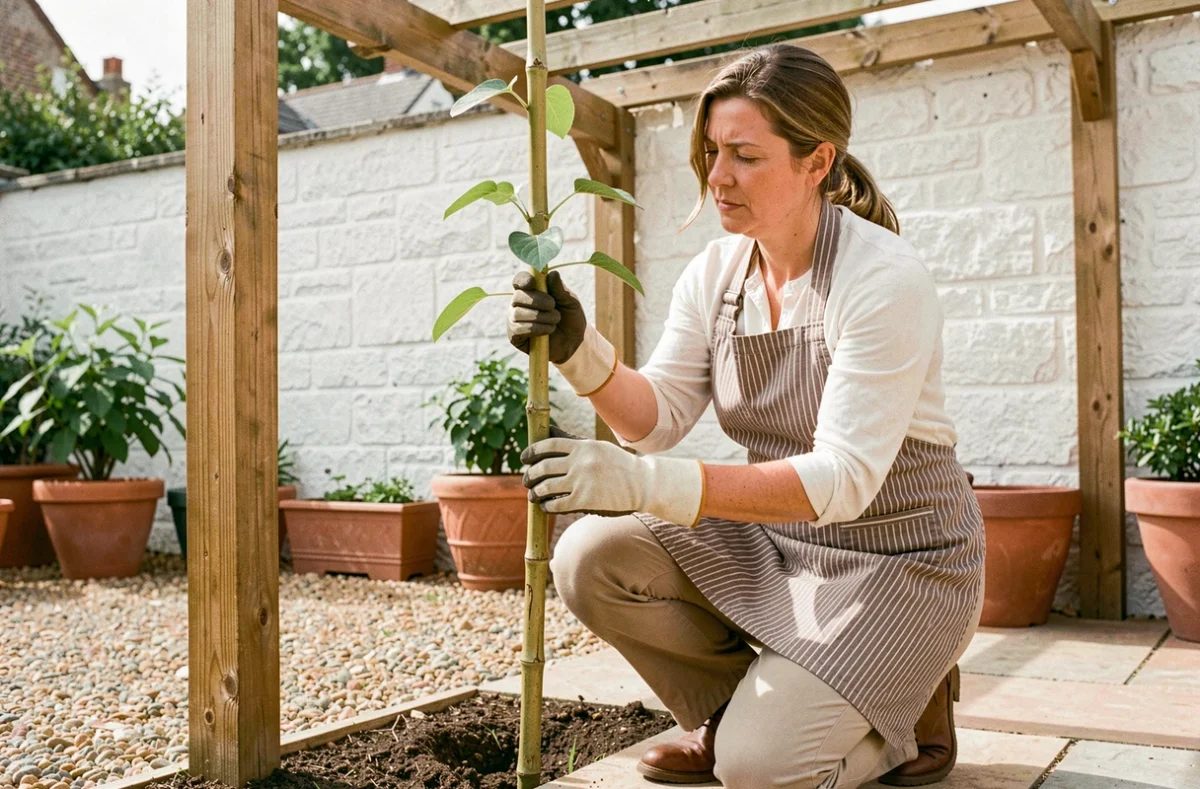
In both cases, each post must be securely anchored in the ground. Setting it in a concrete block prevents tipping under the weight of adult foliage and fruits. Bracing (diagonal reinforcements fixed at the base of the post) adds extra security against the wind.
Wire, spacing, and tension: sizing for the adult plant
Why do so many structures end up sagging after a few years? Because they were designed for a young plant, not for a several-meter vine loaded with fruits.
Trellising relies on wires stretched horizontally between the posts. Here are the practical guidelines to remember:
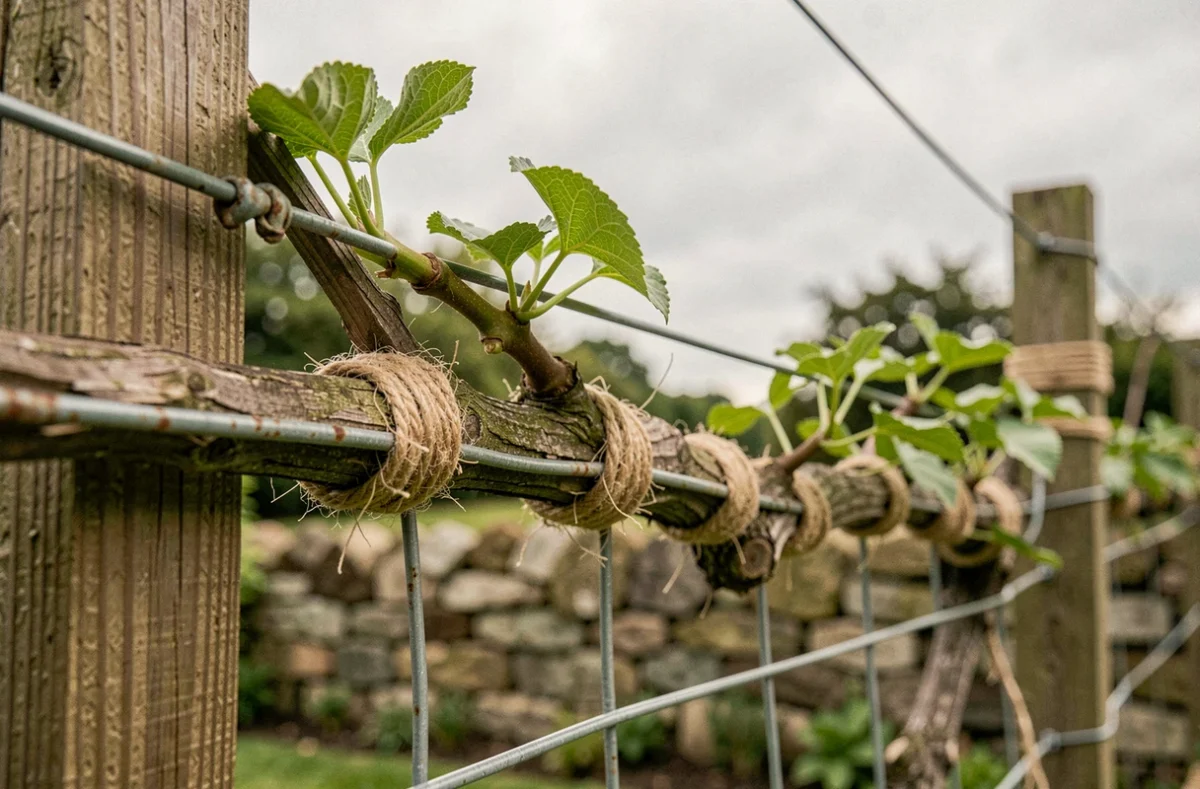
- Wire with a sufficient diameter (about 2.4 mm) so it does not deform under load. A wire that is too thin bends and shears the branches.
- A tensioner at each end of the wire to compensate for the inevitable slack over the seasons. Without a tensioner, the entire system loses its rigidity in one or two years.
- A regular spacing between the wires (about 50 cm) to distribute the branches over the entire height and facilitate pruning and harvesting.
- Posts spaced about 3 meters apart. Beyond that, the wire bends too much between two supports, even with a good diameter.
Plan the complete structure before planting. Installing wires afterward, with a vine already in place, is much more complicated and risks damaging the branches.
Pergola, wall trellis, or T-structure: what type of support for which garden
Line trellising on wires is the most common method, but it is not the only option. The choice depends on the available space and exposure.
The trellis against a wall
A well-exposed wall can serve as support. A sturdy trellis or wires are fixed on hooks, leaving a few centimeters of space between the wall and the plant for air circulation. This solution saves space, but pruning and harvesting remain more difficult than in open fields.
The pergola: shading and production
In hot regions, the pergola protects the kiwi from the afternoon sun. The actinidia does not tolerate very hot and dry conditions well. A pergola oriented to filter direct light in summer offers a double advantage: it limits the plant’s water stress and creates a pleasant shaded space in the garden.
The pergola requires a robust framework. The weight of an adult actinidia with its fruits is comparable to that of a very productive vine. Undersized posts eventually bend.
The T-structure
This is a compromise between the simple line and the pergola. Each post carries a horizontal arm in the shape of a T, on which two or three parallel wires are stretched. The branches fall on either side, which facilitates harvesting and improves air circulation in the foliage.
Guiding young shoots without breaking them
The structure does not do everything. In the first years, the stems of the actinidia are flexible but brittle. Tie them to the wires with soft ties (raffia, fabric strips, rubber ties). A rigid tie like bare wire injures the bark and creates entry points for diseases.
Guide the main stem vertically to the first wire, then let it branch horizontally. The lateral shoots will bear the fruits. Resume guiding each spring, as growth is rapid and new shoots go in all directions.
A well-sized support from the start, wood suitable for contact with the ground, and maintained trellising each year are the three elements that make the difference between a productive kiwi and an uncontrollable vine. The material matters less than the care given to anchoring and tensioning the wires.