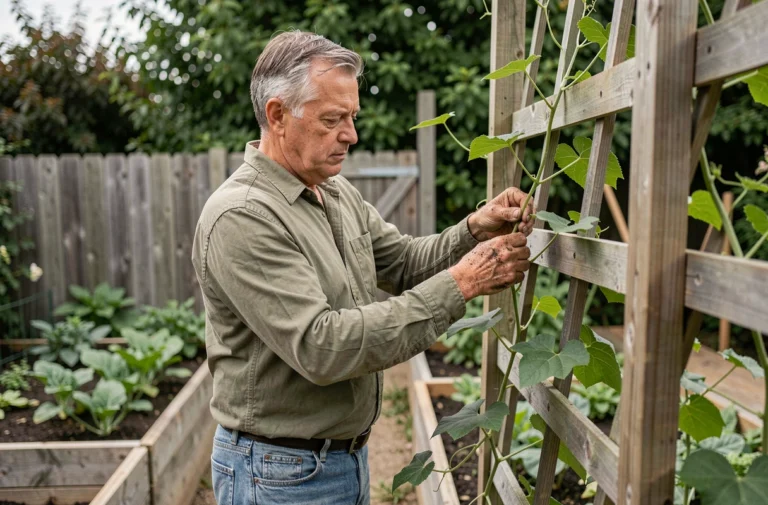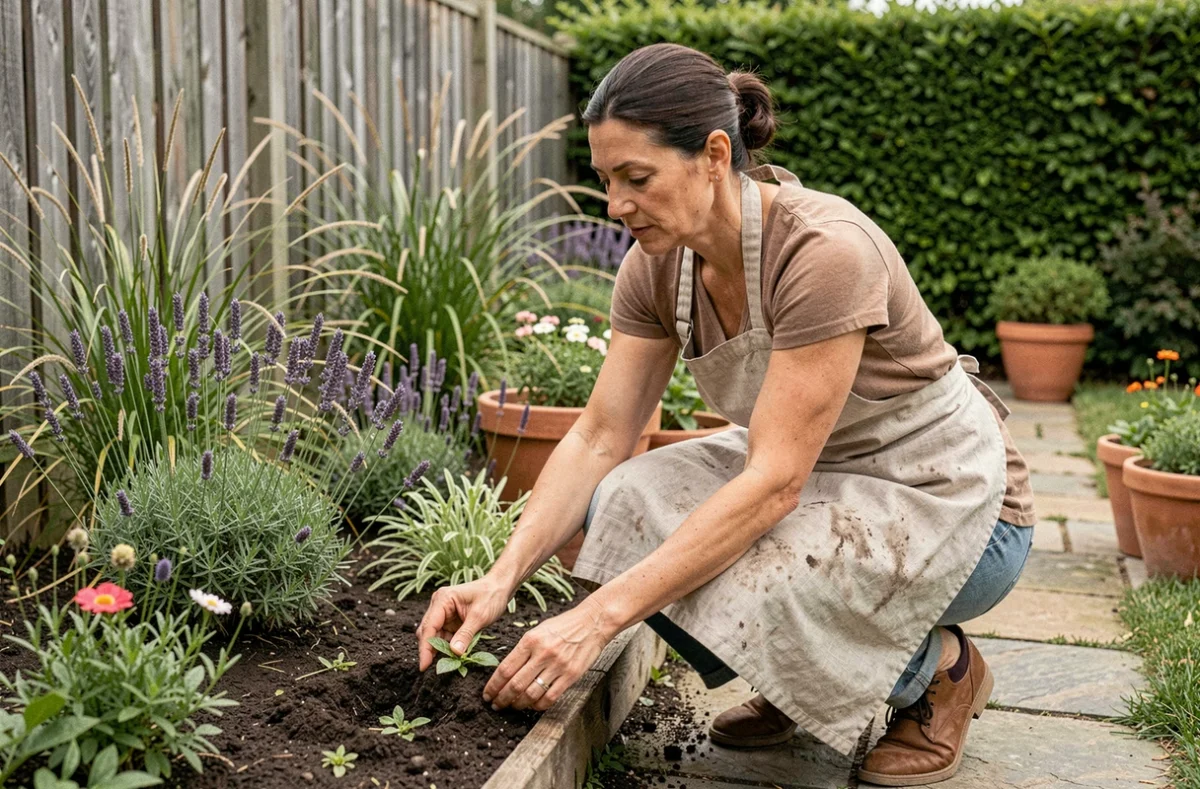
A gently sloping plot facing south is not developed like a flat, shaded parcel next to a party wall. Before choosing materials or plants, it is the soil, water, and regulatory constraints that dictate the initial decisions. Successfully designing the exterior of your garden starts with a site assessment, not a catalog of inspirations.
Water management in the garden: the starting point that no one addresses first
People often think about plants, the terrace, and furniture. Water comes last. This is a sequencing error. Recent recommendations prioritize rainwater retention and infiltration on-site rather than irrigation as the main solution.
Specifically, this means assessing the soil’s capacity to absorb water before deciding where to place a terrace or a flower bed. A soil compacted by machinery or a concrete slab repels rain instead of storing it. De-paving certain areas, creating swales, or installing draining flower beds are actions to plan from the outset.
Mulching also plays a structural role. Applied to flower beds and at the base of plants, it limits evaporation in summer and protects soil life. A projected water balance can examine the source of available water, the soil’s storage capacity, and the strategy to adopt during dry periods.
For those considering the reuse of treated wastewater, the decree of December 14, 2023, amended in 2025, regulates this use with precise sanitary requirements regarding water quality, risk assessment, and storage conditions. This is not a simple domestic alternative to drinking water. We approach exterior design with Instant Jardin by integrating this dimension right from the planning stage.
Terrace and pergola: urban planning formalities before the first works
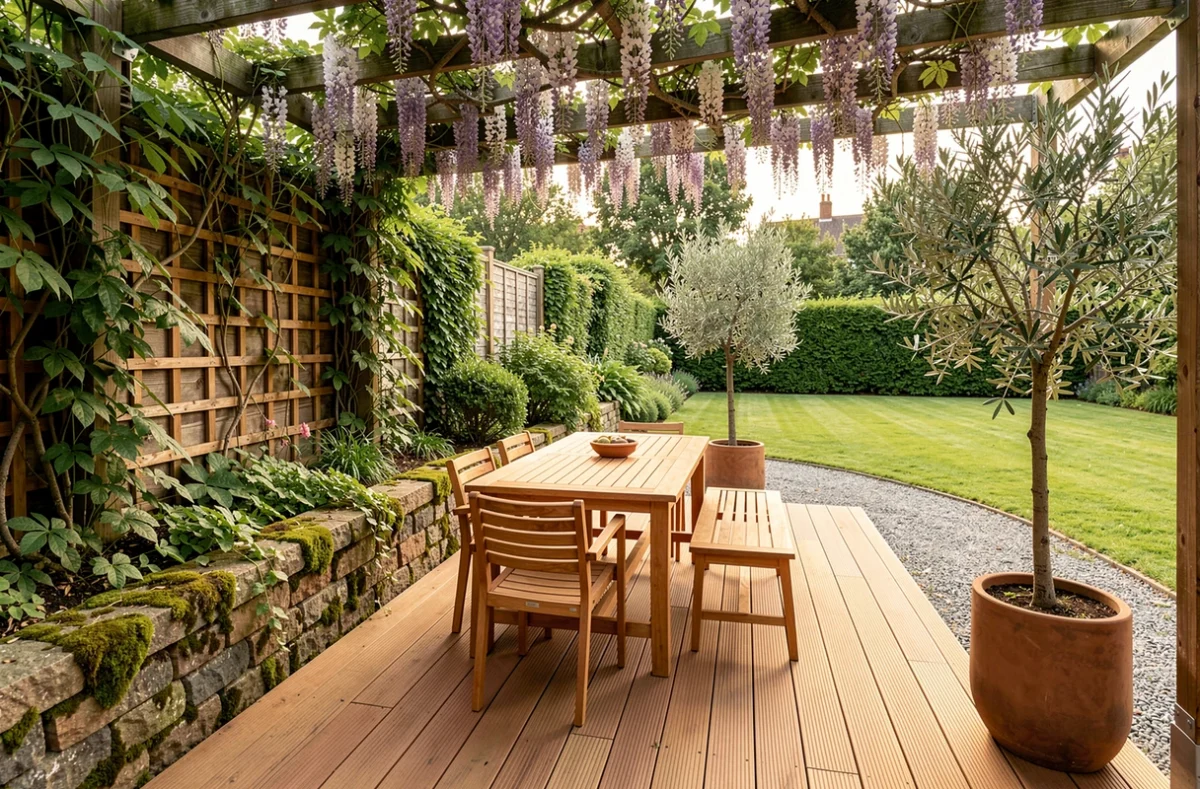
Installing a terrace may seem trivial. In practice, a covered terrace creates ground coverage from the very first square meter. A pergola attached to the house alters the building’s exterior appearance and may require a prior declaration, even if small.
The rules vary based on several criteria:
- Is the structure covered or open? A pergola with a retractable cover is not treated the same as a bioclimatic pergola with fixed slats.
- Is the terrace elevated compared to the natural ground? Beyond a certain height, a declaration becomes mandatory.
- Is the garden located in a protected area (within the perimeter of a historical monument, classified site)? Requirements are then strengthened, sometimes requiring the opinion of the architect of the Buildings of France.
Checking the local urban planning plan of your municipality before purchasing materials avoids unpleasant surprises. We have seen homeowners forced to dismantle a pergola due to a lack of prior declaration.
Fences and boundary limits
Installing a fence on your property is not always done freely. Depending on the municipality, a prior declaration may be required. The PLU may impose maximum heights, materials, or setbacks from the public road.
A stone wall, a vegetative hedge, or a composite screen do not have the same regulatory status. Before choosing a style, consult the town’s urban planning department.
Choosing materials and plants based on garden exposure
Exposure dictates everything. A south-facing area with well-draining soil will easily accommodate Mediterranean plants, light natural stone, and a wooden terrace. A north-facing garden, shaded by the house, requires materials that do not green too quickly and plants suited to partial shade.
Matching materials to the local climate context reduces long-term maintenance. Natural stone ages better in humid climates than low-quality composite wood. Conversely, dark paving in a garden very exposed to sunlight becomes scorching underfoot in summer.
Structuring the space with plant volumes
Plants are not just for decoration. They create natural partitions, visual screens, and shaded areas. A medium-sized tree planted in the right spot can replace a pergola to shade a dining area.
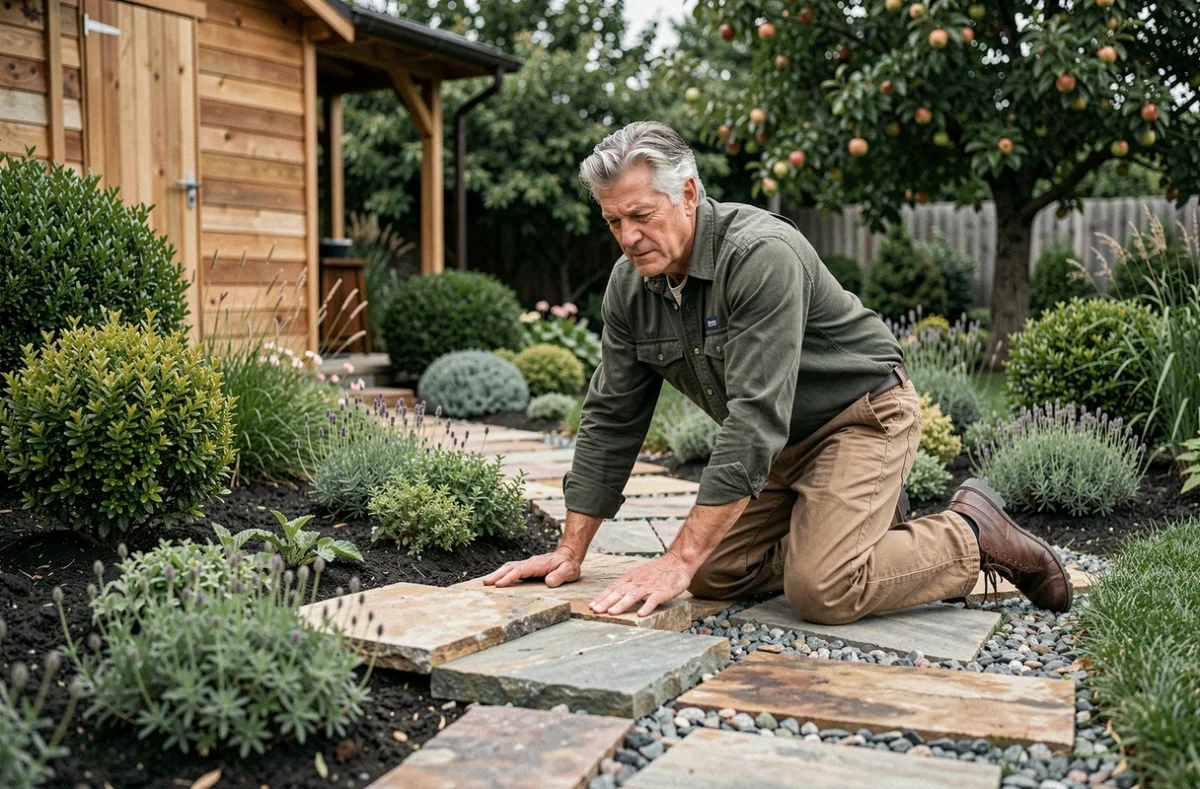
We distinguish three useful layers for a balanced outdoor design:
- The low layer (ground covers, perennials, grasses) dresses the base of the flower beds and limits weeding.
- The intermediate layer (shrubs, trimmed or free hedges) structures the boundaries and guides the eye.
- The high layer (ornamental trees, fruit trees) provides shade, vertical volume, and a visual marker from the house.
Planting these three layers in the same flower bed creates a plant density that works in all seasons. Colors and blooms alternate if we select species with staggered cycles.
Garden design plan: starting from the land, not from a Pinterest image
An effective garden plan starts with a survey. Measure distances, note slopes, identify wet areas and dry spots. Only then do we draw the pathways.
Paths are not an aesthetic detail. They determine how we use the garden daily. A path that is too narrow between the gate and the front door becomes cumbersome when carrying groceries. Planning at least a comfortable width for frequent passages changes the perception of the entire space.
Feedback varies on this point, but grouping uses by area simplifies maintenance: dining area near the kitchen, vegetable garden close to a water point, play area visible from the living room. This functional logic results in a garden that ages well because we continue to use it actively.
The exterior design of a garden is not just about choosing a style between contemporary and rustic. The soil, water, regulations, and exposure form a framework. Once this framework is established, the choices of materials, plants, and furniture find their place naturally, without unpleasant surprises in the first season.