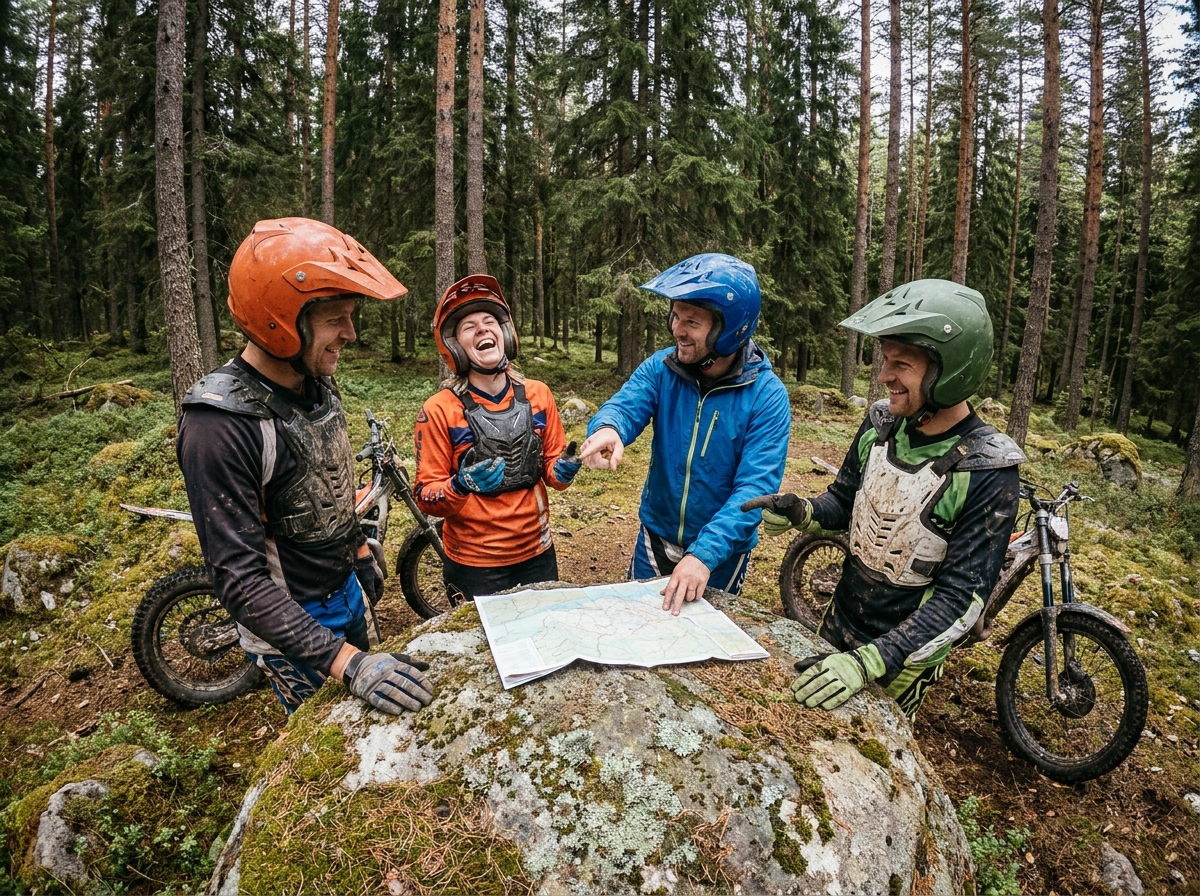
A group of five friends, three different skill levels, one path: after an hour, the one struggling uphill starts to grit their teeth while the two best riders grow impatient at the summit. We all know this scenario. Riding trial bikes with friends requires settling a few points before starting the engine, or else you risk coming back with grudges more stubborn than the mud on the fenders.
Different levels in trial: the real trigger for tensions
The problem doesn’t come from the bike. It comes from the riding gap. A trial rider who crosses a rocky section in three attempts does not ride at the same pace as someone who makes it on the first try. Multiplied by a dozen obstacles on a course, the gap mechanically widens at each technical section.
The classic temptation is to say “we’ll adapt.” In practice, we don’t adapt: the best rider slows down, gets bored, and then speeds up as soon as they find an engaging section. The less experienced rider accelerates to keep up, takes risks, falls, and eventually becomes frustrated.
The operational solution is to break the outing into segments with fixed regrouping points. Before departure, four or five landmarks are defined on the course (a notable tree, an intersection, a flat area) where everyone meets. Between two points, everyone rides at their own pace. No one waits standing on the kickstand looking at their watch, and no one feels pushed from behind.
When choosing a trial bike for this type of outing, the question of motorcycle insurance also arises: riding together on rough terrain increases the risk of damage or injury, and appropriate coverage prevents an incident from turning into a financial conflict among friends.
Choosing the trial route: anticipating conflicts before departure
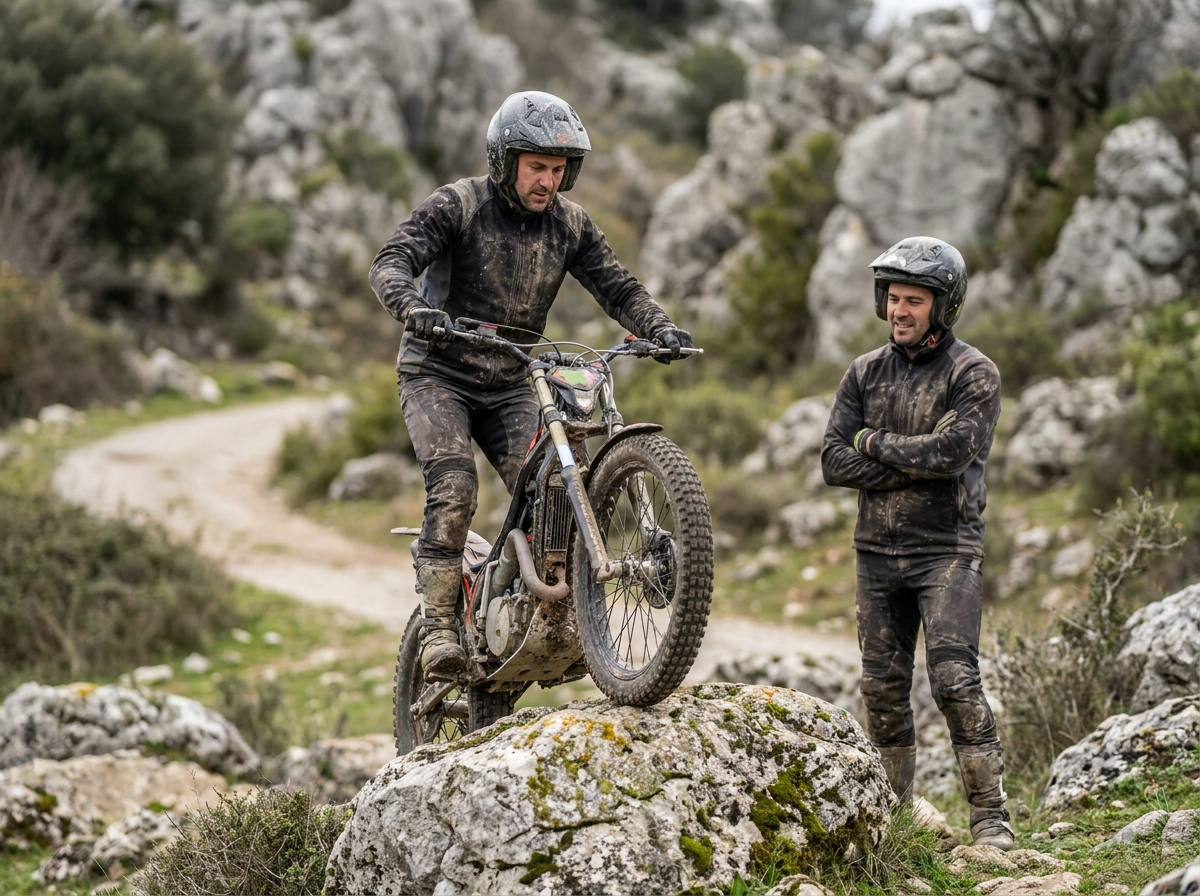
You don’t set out to “ride” in trial like you do for a trail ride on a forest path. The terrain is chosen based on the least experienced member of the group, not the best. This is a simple rule that many ignore.
A course that is too technical for half the group creates two problems. The first is physical: fatigue sets in faster when forcing through obstacles beyond one’s level, and fatigue in trial means more frequent falls. The second is relational: the one who holds up the group on a section ends up feeling responsible for the bad atmosphere.
Terrain scouting and legal framework
The Environmental Code prohibits motorized traffic off public roads. This regulatory constraint creates a direct source of friction within the group: one rider wants to cut through an unauthorized path, another refuses. Agreeing on legal paths before departure eliminates this type of disagreement on the ground.
- Check on the IGN map or municipal resources that the intended paths are indeed open to motorized traffic
- Prefer declared rides with the federation, with a day license and medical certificate, to benefit from clear insurance coverage
- Avoid Natura 2000 areas and closed state forests, where fines can be heavy and motorcycle confiscation possible in case of repeat offenses
Participating in a ride organized by a club or regional league resolves the route issue: the trail is validated, marked, and no one in the group bears the responsibility for the route choice. Feedback varies on this point, but for many groups of friends, delegating the logistics of the route to an external organizer has saved friendships.
Ride pace and breaks: what is decided at the briefing
A five-minute briefing before departure changes the dynamic of the entire outing. Three concrete things are established: the total duration, the number of breaks, and the rule in case of breakdown or injury.
Setting a maximum duration protects the group from overruns. In trial, fatigue is treacherous. After two hours on technical terrain, concentration drops and mistakes accumulate. It’s better to have a two-hour outing where everyone returns happy than a four-hour marathon that ends in arguments.
Managing mechanics and unforeseen events
A flat tire, a broken clutch lever, a punctured radiator: on a trial outing in natural terrain, breakdowns are part of the program. The question to resolve before departure is simple: do we wait together, or does the group continue while one or two stay with the struggling rider?
- Carry a minimal repair kit per bike (inner tube, spare lever, zip ties, aluminum tape)
- Designate a “sweep rider” who rides last and has everyone’s number
- Agree on a waiting time at the regrouping point (twenty minutes, thirty minutes) before sending someone to scout
These rules are not bureaucracy. They prevent the moment when someone says “I was left alone for an hour with my broken bike” at dinner.
Ego and trial riding: defusing implicit competition
Trial is a discipline of control, not speed. However, competition among friends sneaks in everywhere: who crosses the section first, who doesn’t put a foot down, who cleans the section without mistakes. This constant comparison dynamic turns a pleasure outing into an unannounced ranking test.
Valuing individual progress rather than relative performance changes the atmosphere. Filming difficult sections and reviewing the videos together upon return replaces implicit hierarchy with technical sharing. The one who struggled on a rock can analyze their trajectory, and the one who made it can explain their positioning without it feeling like a lesson.
A group that rides together regularly also benefits from alternating roles. The most experienced rider leads the way once every two times, not systematically. When an intermediate rider leads, the overall pace naturally slows, and no one experiences it as an imposed slowdown.
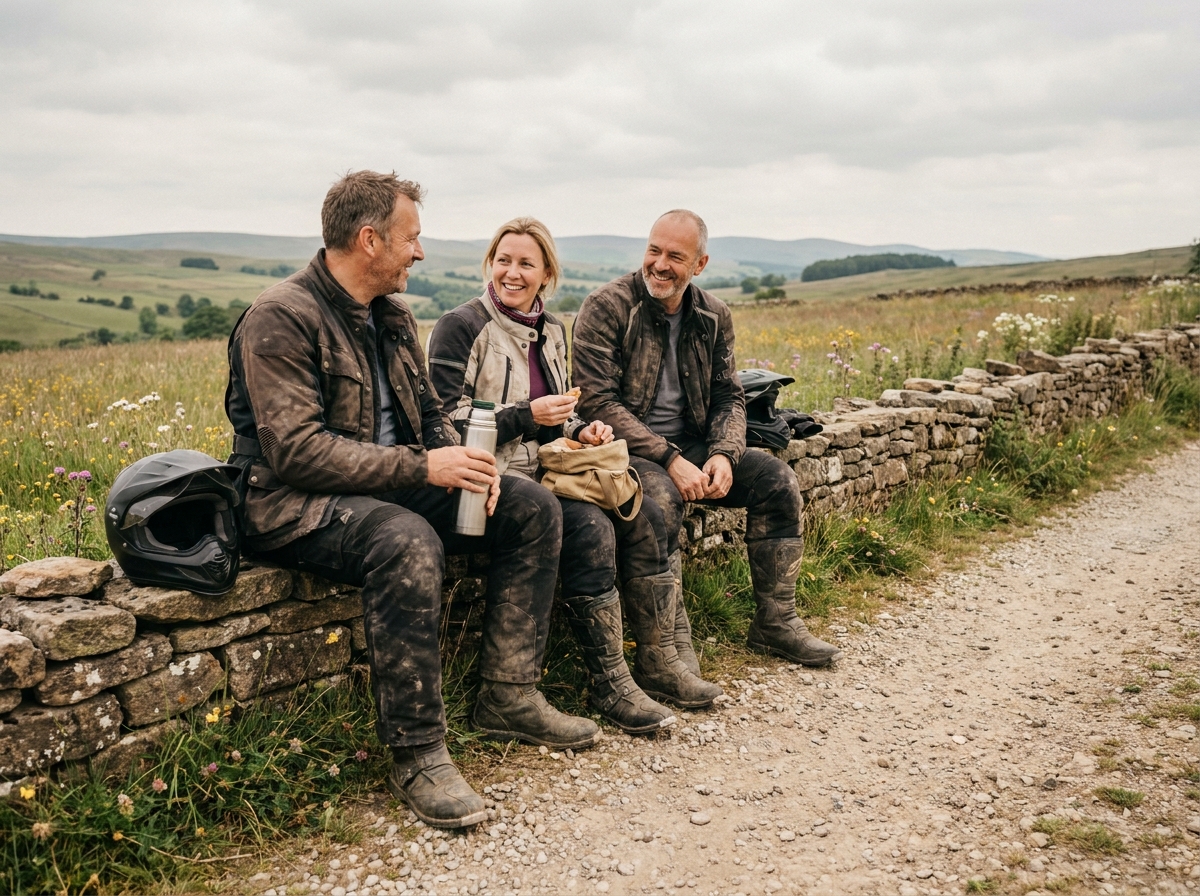
Riding with friends on trial bikes works when the rules are set before departure and when everyone accepts that the group’s enjoyment takes precedence over individual performance. The best memory of an outing is never a section crossed solo; it’s the moment when everyone meets at the regrouping point with a smile.