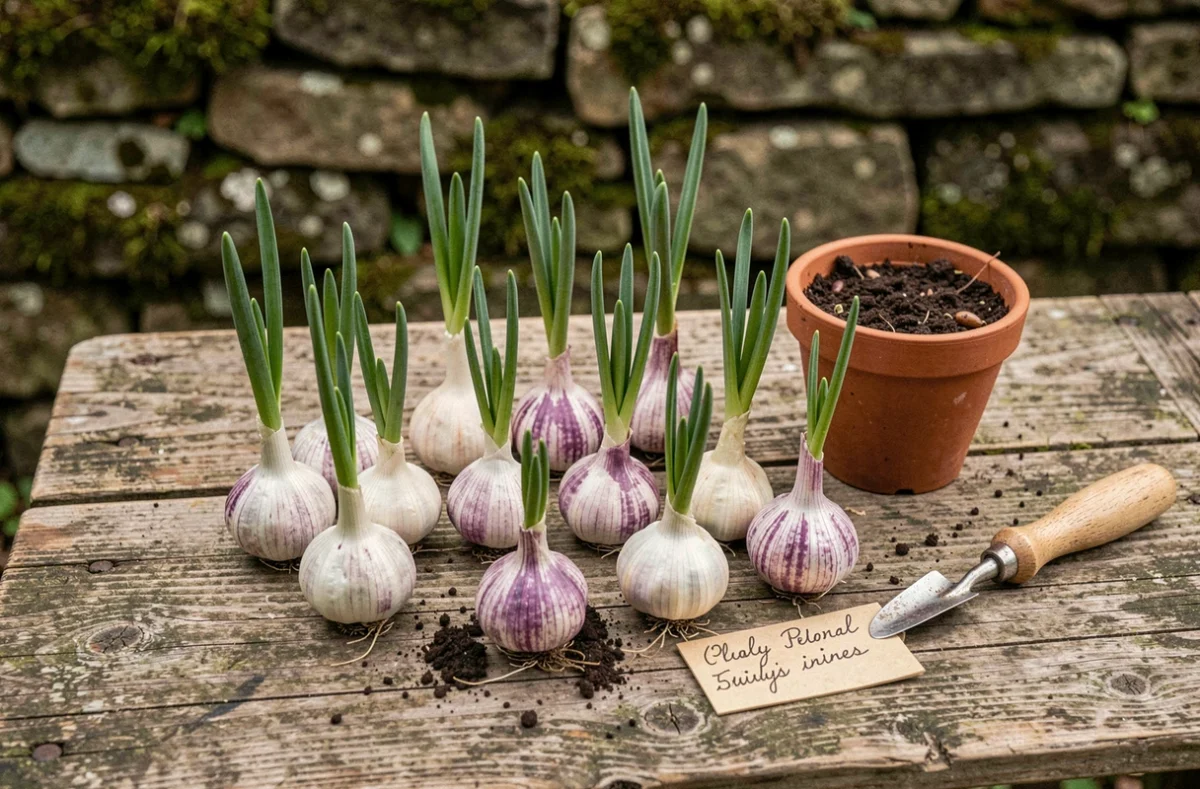
A clove of garlic sprouting in the kitchen cupboard is not waste. This green sprout, often seen as a sign of spoilage, indicates that the bulb has begun its vegetative cycle and is ready to be planted. Planting sprouted garlic allows you to make use of cloves destined for the trash, provided you follow a few rules regarding soil, season, and handling of the cloves.
Sprouted garlic and healthy cloves: knowing how to sort before planting
The sprout is not the problem. A clove that has produced a green shoot a few centimeters long remains perfectly viable, as long as it is firm and free of mold. Texture is the real indicator: a soft, spongy, or blue-green stained clove should be discarded without hesitation.
Green rot, caused by the fungus Penicillium, takes hold on damaged or weakened cloves. The separation of cloves from the bulb is the critical moment. Separating garlic just before planting, rather than several days in advance, limits the drying of the base of the clove and reduces entry points for spores. Handling the cloves without bumping or cutting them is part of the actions that protect the future harvest.
Some gardening tips on Encore Le Printemps also detail the selection of cloves based on their size, a criterion often overlooked that directly influences the size of the harvested heads.
Soil drainage and sprouted garlic: the trap of excess water
Most garlic planting guides emphasize exposure and spacing. However, the determining factor is drainage. Garlic (whether sprouted or not) does not tolerate standing water around the bulb. A soil saturated with moisture causes root rot within weeks, especially during the cold months.
Preparing soil that drains water
A compact clay soil must be lightened before any planting. Incorporating coarse sand or well-decomposed compost to a depth of about twenty centimeters improves the structure without radically changing the composition. Garlic prefers loose, slightly calcareous soil that is never waterlogged.
In pots, drainage relies on a layer of clay pebbles at the bottom of the container and a potting mix that does not retain water like a sponge. A mix of potting soil and sand (two-thirds, one-third) works well for balcony cultivation.
Nitrogen and rust: a direct link
An excess of nitrogen promotes rust, a fungal disease that manifests as orange pustules on the foliage. Soil enriched with fresh manure just before planting creates exactly these conditions. It is better to amend the soil several months in advance or to use mature compost that is low in free nitrogen.
Planting sprouted garlic in the ground: depth and orientation
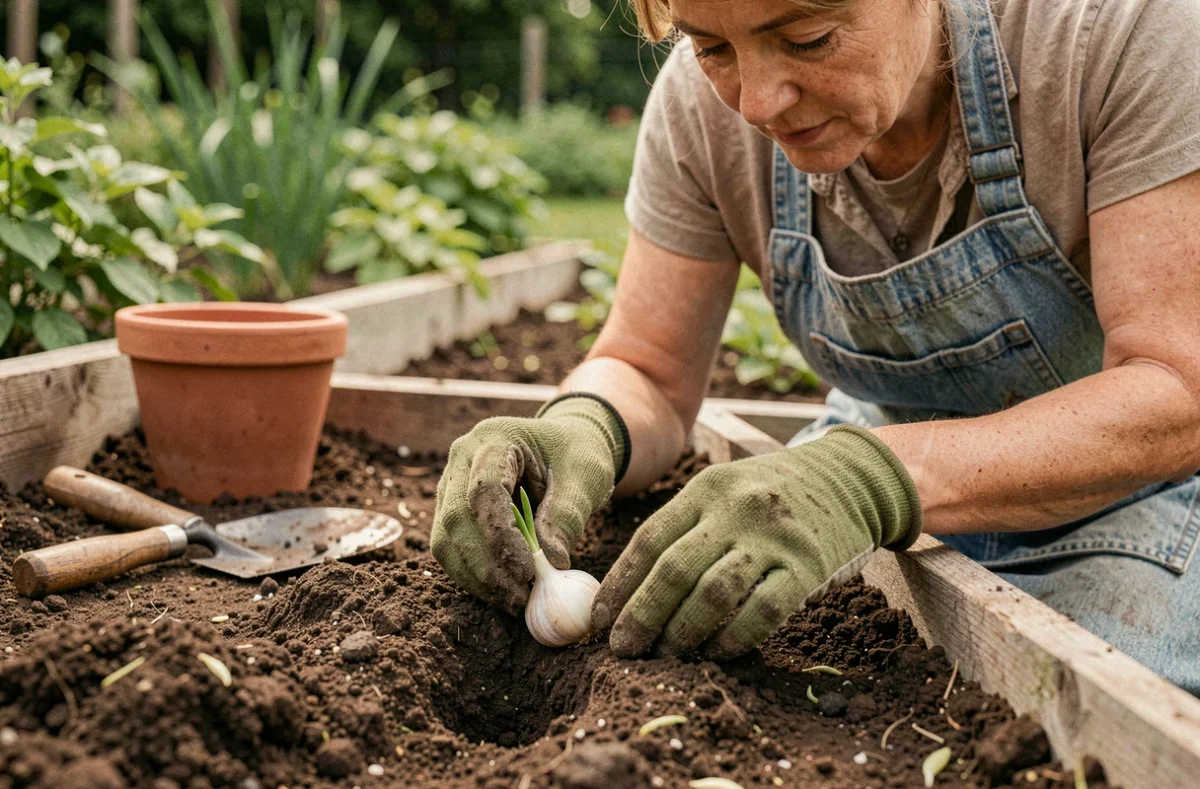
The planting technique remains the same as for a non-sprouted clove, with one nuance: the sprout is already protruding from the clove. The point should be planted upwards, including the sprout, without trying to bury it completely. Leaving the tip of the sprout just above the surface facilitates emergence.
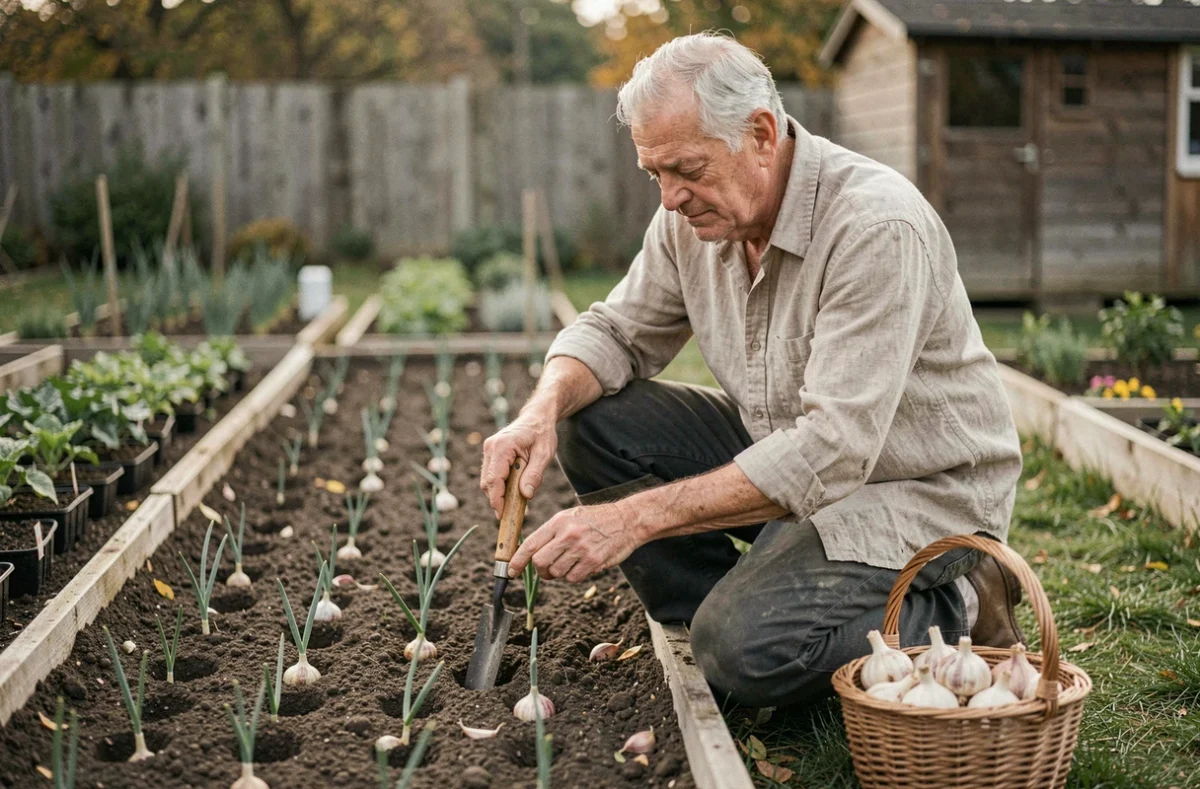
- Insert each clove to a depth equivalent to twice its height, about a few centimeters below the soil surface.
- Space the cloves about ten centimeters apart in the row, and allow about twenty centimeters between rows for hoeing.
- Lightly pack the soil around the clove without compressing the sprout, then water once to make contact between the soil and the base of the clove.
Do not water again as long as the soil remains cool to the touch. Garlic starts its root growth with very little water. Excess watering at this stage causes exactly the rot problems mentioned above.
Planting season for sprouted garlic: autumn or spring
The planting season depends on the type of garlic and the local climate. White garlic and purple garlic (autumn varieties like Messidrome or Germidour) are planted between October and November. Pink garlic, particularly Lautrec pink, is planted at the end of winter, between February and March.
A sprouted clove found in the kitchen in mid-winter poses a dilemma: the autumn window has passed, and the spring one has not yet opened. In this case, there are two options.
- Plant in a pot and keep the pot sheltered from frost (veranda, bright windowsill) while waiting to transplant to the garden.
- Store the sprouted clove in the refrigerator, wrapped in dry paper towels, to slow the growth of the sprout until the spring planting window.
- Accept to harvest only garlic leaves (edible green shoots with a mild flavor) if planting occurs outside the appropriate schedule, without hoping to form a complete bulb.
A sprouted garlic planted at the right time produces normal bulbs. Planted out of season, it yields at best usable green shoots in the kitchen as a chive substitute.
Maintenance after planting and signs of garlic harvest
Once in the ground, sprouted garlic requires little intervention. Regular hoeing between rows prevents weeds from competing with the young plants. Mulching is optional in mild climates, but it protects the cloves in regions where frost drops below minus five degrees.
Watering is limited to dry periods in spring. As soon as the leaves begin to yellow and flop over (usually in June or July for autumn plantings), all watering should be stopped. This yellowing indicates that the bulb has finished growing and is entering the maturation phase.
Harvesting is done in dry weather by pulling the heads with a garden fork. The bulbs are then dried in the open air, in the shade, for one to two weeks before being braided or stored in a cool, ventilated place. Well-dried garlic can be stored for several months without sprouting again, provided it is kept away from moisture and direct light.