A gratin dauphinois taken out of the refrigerator often follows the same scenario: it goes back into the oven, and the surface cracks while the inside remains lukewarm. Reheating a gratin in the oven without drying it out requires a few simple adjustments, but they completely change the outcome.
Reheating temperature for the gratin: why go below 150 °C
The usual reflex is to crank the oven up to 180 °C or more to speed things up. The problem is that high heat evaporates the residual water from the cream and potatoes long before the center of the dish is hot.
Better results are achieved by setting the oven between 120 °C and 140 °C. At this range, the heat gradually penetrates without drying out the surface. The reheating time is extended, but the texture remains creamy.
Some chefs in collective catering even prefer reheating below 80 °C combined with an addition of herb-infused fresh cream, according to a survey by UMIH published at the end of 2025. This method prevents the separation of emulsions, a common flaw when reheating a cream gratin at too high a temperature. For those who want to delve deeper into the techniques, you can reheat a gratin in the oven with La Table de Jeanne and compare approaches.
Protecting the gratin during reheating: aluminum, lid, or silicone alternative
Covering the dish is the most effective measure against drying out. The steam gets trapped, moistens the surface, and prevents the crust from hardening prematurely.
Aluminum foil: the classic that works
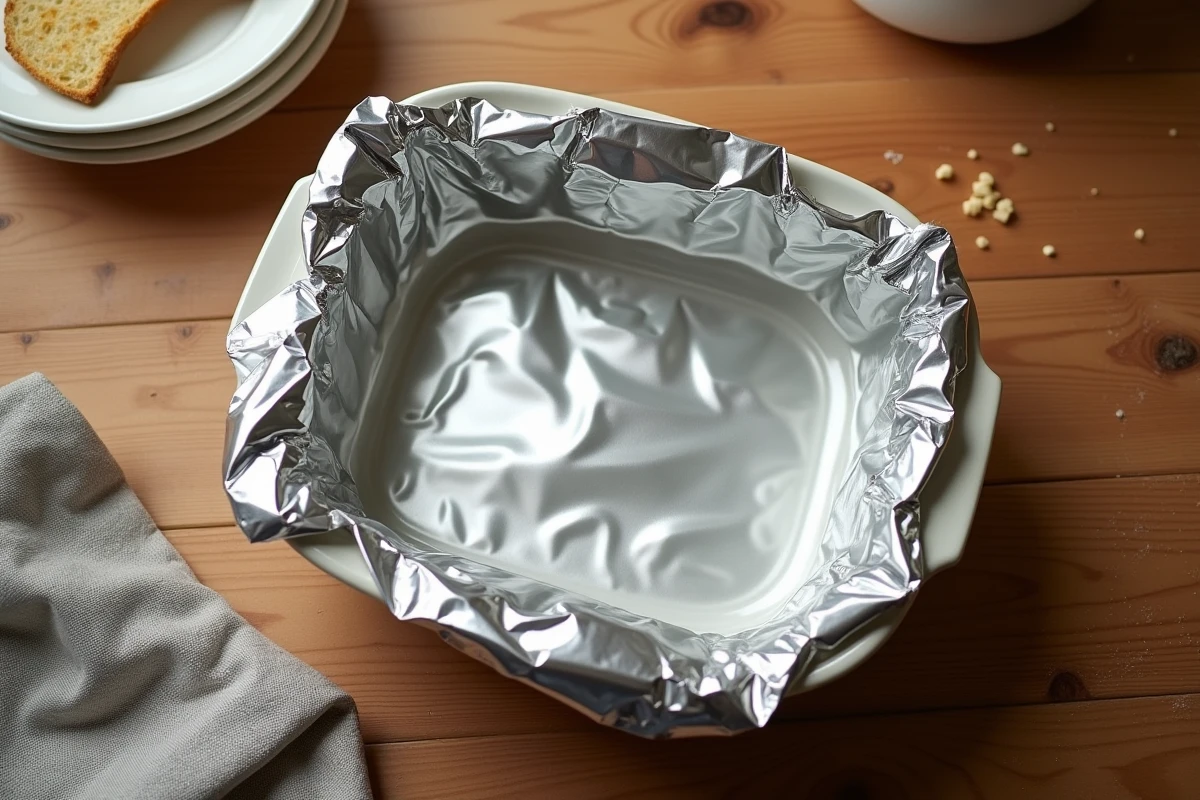
Place a sheet of aluminum foil over the dish, without tightening it. Leaving a slight gap allows steam to circulate while remaining confined. Removing the aluminum during the last five minutes restores crispness to the surface without burning it.
Reusable silicone lids: the sustainable option
Since the implementation of Regulation (EU) 2025/456 on materials in contact with food, uncertified plastic films are prohibited for covering a dish in the oven. Food-grade silicone lids can withstand oven heat and serve the same purpose as aluminum, with the added benefit of being washable and reusable.
Adding moisture before reheating: cream, milk, or water
A potato gratin that has spent a night in the refrigerator has lost some of its moisture. Without compensation, even a low temperature will not prevent a dry texture.
Adding two to three tablespoons of cream or milk on top of the gratin before baking makes a noticeable difference. The liquid seeps between the layers and recreates the original creaminess during reheating.
For a gratin dauphinois, fresh cream remains the best choice: it adds fat that protects the binding. For a lighter vegetable gratin, a drizzle of milk or even a few spoonfuls of vegetable broth works well. Feedback varies on this point depending on the type of gratin, but the principle remains the same: compensate for the lost moisture before turning on the oven.

Reheating a gratin dauphinois in the oven: concrete steps and timing
Rather than a table of theoretical times, here is the method we apply for a standard dish taken out of the refrigerator:
- Take the gratin out of the refrigerator at least twenty minutes before reheating to reduce the temperature gap between the cold dish and the oven
- Spread two to three tablespoons of cream or milk over the entire surface, focusing on the edges that dry out first
- Cover the dish with aluminum or a silicone lid, bake at 130-140 °C
- Let it reheat until the center of the gratin is hot to the touch (count between twenty-five and forty minutes depending on the thickness of the dish)
- Remove the cover and raise the oven temperature to 180 °C for five minutes to achieve a golden crust without drying out underneath
This final step at a higher temperature only concerns the surface. The center, already at a good temperature, does not undergo thermal shock.
Vegetarian gratins and meat gratins: different behaviors when reheating
We often treat all gratins the same way, while their composition changes their reaction to heat. Root vegetable-based gratins (parsnips, beets, sweet potatoes) contain natural sugars that act as humectants. They retain water better and dry out less quickly than versions containing ground meat or shredded chicken.
For a meat gratin, adding liquid before reheating is more critical. The meat, when cooling, absorbs the surrounding fat and moisture. Without compensation, you end up with a layer of dry protein under a crust that looks fine.
Conversely, a zucchini or eggplant gratin may release excess water. In this case, limit the addition of liquid and leave the lid slightly open to avoid an overly moist result.
Air fryer and reheating gratin: an option to consider
The air fryer is gaining traction for reheating leftovers, including gratins. The circulation of hot air allows you to reheat a gratin in individual portions more quickly than in a traditional oven while keeping the surface crispy.
The limitation comes from the size of the basket: a large earthenware dish won’t fit. This method is reserved for already cut portions, placed in a compatible small dish. A few minutes at moderate temperature is sufficient, watching closely to avoid crossing the line between golden and burnt.
The reheated gratin doesn’t have to be a compromise. Low temperature, dish protection, and calibrated liquid addition according to the type of gratin: these three levers, combined, yield a result as satisfying as the first cooking.