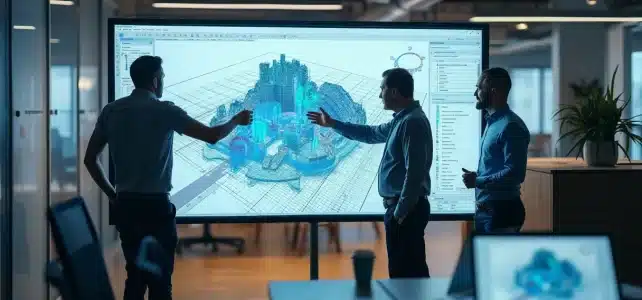
Engineers, faced with increasingly complex projects, have found an invaluable ally: collaborative platforms. By enabling smooth communication and optimized resource management, these tools are transforming the way technical solutions are conceived and developed.
Teams, often geographically dispersed, can now work in synergy, instantly sharing critical data and innovative ideas. This new work dynamic, fostered by cutting-edge technologies, promises spectacular advancements in the field of engineering while reducing costs and increasing efficiency.
Further reading : The best platforms to watch anime streaming
The stakes of collaborative platforms in modern engineering
In the engineering sector, collaborative platforms are redefining work methods. By integrating collaborative BIM (Building Information Modeling) tools, they facilitate the management and sharing of data among the various stakeholders in construction projects. These platforms allow for optimal coordination among team members, thereby reducing the risks of errors and implementation delays.
Planet INP, for example, is a platform that embodies this digital revolution. By providing a Common Data Environment (CDE), it centralizes information and ensures its accessibility to all stakeholders. This approach fosters continuous collaboration and improves project quality.
Recommended read : The best platforms to stream your sports matches
The advantages of digital twins
Digital twins are another major innovation. Considered virtual replicas of existing built or natural heritage elements, they are used by communities and companies to anticipate and plan interventions. BIM collaboration platforms foreshadow this technology by allowing detailed visualization and simulation of projects before their realization.
The challenges to overcome
To fully leverage these advancements, engineers must overcome several challenges:
- Mastering new technologies and adapting design processes.
- Integrating collaboration tools into daily practices.
- Managing data and ensuring its security.
Collaborative platforms and digital twins represent a profound transformation in the engineering sector, offering unprecedented prospects for development and project management.
How collaborative platforms are transforming engineers’ practices
Collaborative platforms are redefining how engineers approach their projects, particularly through Building Information Modeling (BIM) and Common Data Environments (CDE). By centralizing information and facilitating its sharing, these tools enable smoother management of projects and reduce implementation timelines.
Take the example of Re’Tolosa, a project aimed at mass reusing construction products and materials in the Toulouse Métropole region and Occitanie. Through a collaborative platform, partners such as Art Stock, MAS réemploi, and Una ingénierie can coordinate their efforts effectively. This collaboration optimizes resource use and reduces the environmental impact of projects.
The design and construction phases
Collaborative platforms are particularly useful during the design and construction phases. They allow team members to track project progress in real-time, quickly identify potential issues, and propose solutions before they affect the overall timeline.
- Data management: Information is centralized in a Common Data Environment (CDE), ensuring its accessibility and security.
- Team coordination: Different stakeholders can collaborate more easily, thus improving the quality and accuracy of projects.
The benefits of technological integration
The integration of collaborative platforms also allows for better management of the project lifecycle. From design to construction and operation, these tools provide an overview that facilitates decision-making and optimizes resource allocation. Consider digital twins, which, as virtual replicas, allow for simulating and anticipating necessary interventions.