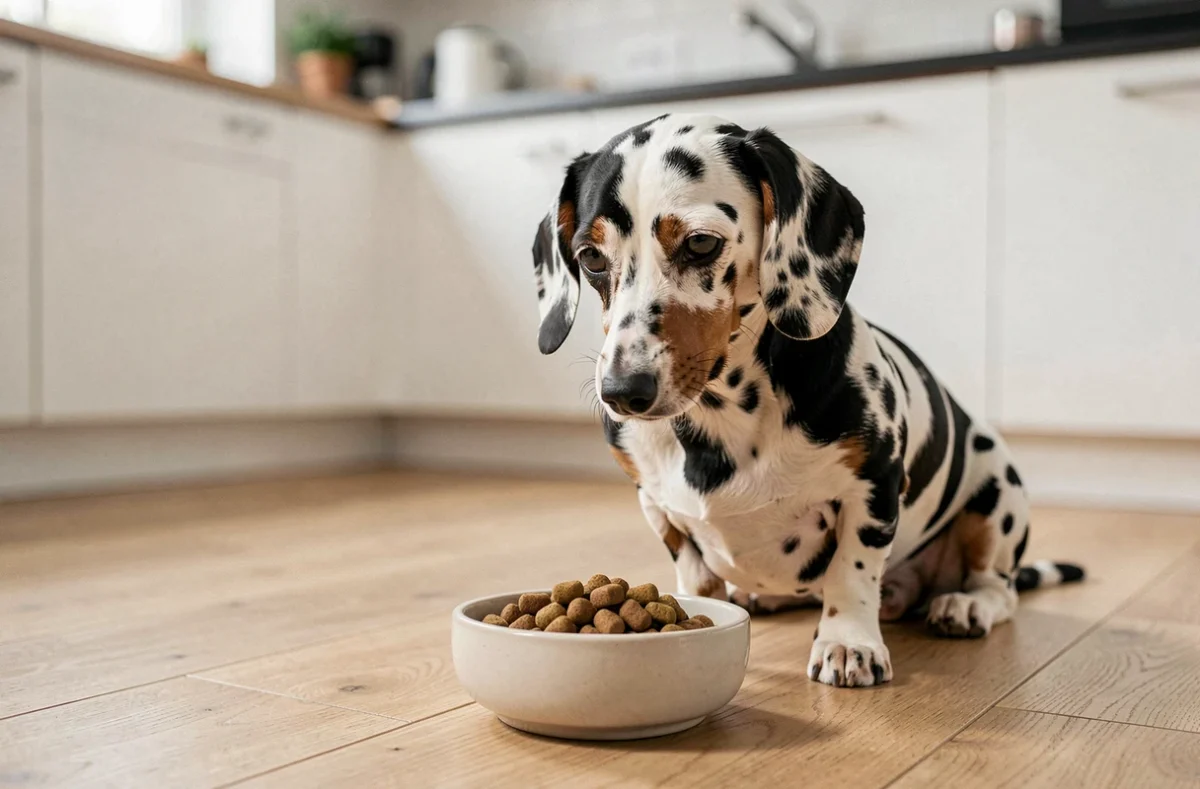
The short-haired harlequin dachshund attracts attention with its spotted coat, but this aesthetic feature does not change its nutritional needs. Dietary recommendations depend on its age, weight, body condition, and activity level, not the color of its fur. The real challenge for this breed remains weight management and protecting its spine, two points directly linked to the contents of its bowl.
Dachshund Body Condition: A More Reliable Criterion Than the Scale
Weighing your dachshund is not enough. The nutritional tools recommended by the WSAVA now distinguish body condition from muscle mass. Two dachshunds showing the same weight on the scale can have very different caloric needs depending on their shape and musculature.
A stocky but poorly muscled dachshund will need a less caloric ration than an active and well-defined individual. To assess body condition, you can feel the ribs: they should be detectable under a thin layer of fat, without being visible or buried. Viewed from above, the waist should be slightly defined between the ribs and hips.
This evaluation, which can be done at home, should be confirmed by a veterinarian at least twice a year. It allows for more precise adjustments to the ration than a simple weight/quantity chart printed on the back of a kibble bag. A comprehensive file on dachshund nutrition on Attitude Canine details the guidelines to follow based on size (standard, miniature, or kaninchen).

Dachshund Overweight and Spine: Why Every Gram Counts
The morphology of the dachshund (elongated body, short legs, chondrodystrophic conformation) places its spine under constant strain. Overweight amplifies this pressure and increases the risk of disc herniation, one of the most common health issues in this breed.
Weight loss should remain gradual to preserve muscle mass. Current recommendations set the goal around a slow decrease, of about one to two percent of body weight per week. A too-rapid restriction leads to muscle loss, which further weakens the back.
To achieve this, three concrete levers work together:
- Weigh the daily ration with a kitchen scale rather than filling the bowl by eye, as visual overestimation is common in small breeds.
- Incorporate treats into the total daily caloric calculation, reducing the portion of kibble or wet food accordingly.
- Favor low-impact exercises (regular walking, ground games) to burn calories without excessively straining the intervertebral discs.
Homemade Ration or BARF for a Dachshund: The Limits to Know
The BARF diet or homemade ration appeals to many dachshund owners, often motivated by the desire to control ingredient quality. Field reports vary on this point: some breeders report improvements in coat and vitality, while others observe imbalances after a few months.
A poorly formulated homemade ration presents a greater nutritional risk than a complete industrial food. The main pitfalls concern the calcium-phosphorus balance, deficiencies in trace elements, and hygiene of raw meats. An industrial food labeled “complete” is formulated to cover all needs, which does not guarantee the quality of raw materials but ensures at least a basic nutritional balance.
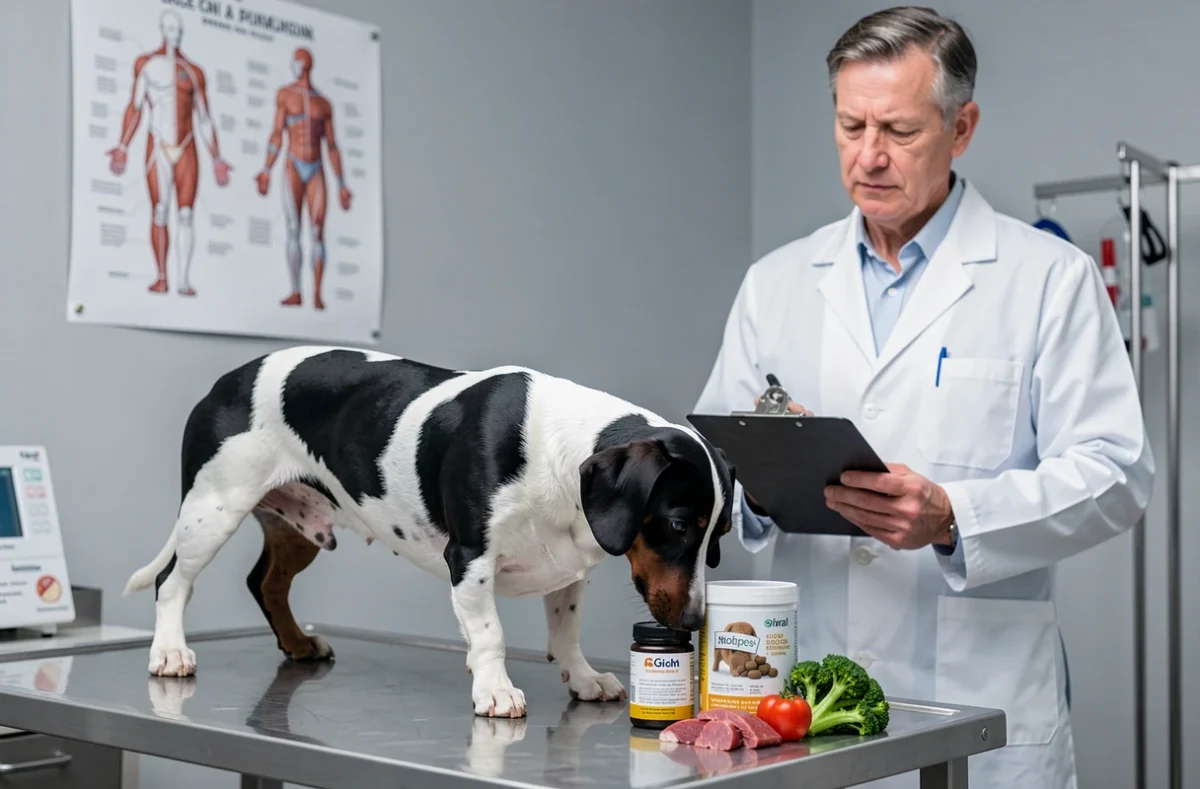
If you opt for a homemade ration, the formulation should be done with a veterinary nutritionist. A meal plan copied from a forum or a Facebook group generally does not take into account the exact size, age, or health status of your dachshund.
The Special Case of the Dachshund Puppy
For puppies, calcium supplements are not recommended without veterinary guidance. A complete puppy food provides the necessary minerals for growth. Adding calcium “to strengthen the back” (a piece of advice circulating in dachshund owner communities) can, on the contrary, disrupt the calcium-phosphorus ratio and interfere with bone development.
The transition to adult food generally occurs between ten and twelve months, a period when the growth of the standard dachshund slows significantly. This transition should be gradual over one to two weeks, mixing the old and new food.
Proteins, Fats, and Carbohydrates: What a Dachshund’s Bowl Should Contain
The dachshund is a carnivore whose diet should be based on a majority of animal protein sources. Proteins contribute to maintaining muscle mass, which is directly related to protecting the spine.
Fats provide concentrated energy, but their proportion should remain moderate given the breed’s tendency to gain weight. Carbohydrates (grains, potatoes, legumes) are not toxic in themselves, but an excess contributes to weight gain without providing notable nutritional benefits.
Ingredients to watch for on the label:
- The protein source should appear first (chicken, lamb, fish), with a clear identification of the animal rather than a vague “animal by-products.”
- The presence of glucosamine and chondroitin is a plus for joints and intervertebral discs, even if the available data does not allow for conclusions about their long-term effectiveness specifically in dachshunds.
- The crude ash content, an indicator of mineral content, should not exceed a reasonable level to avoid overloading the kidneys in the long term.
Your short-haired harlequin dachshund’s coat does not require any special supplements or dedicated diet. What truly protects its health is a ration tailored to its actual body condition, weighed daily, and reassessed with every change in lifestyle or physical state. Regular veterinary follow-up remains the best safeguard against silent imbalances.