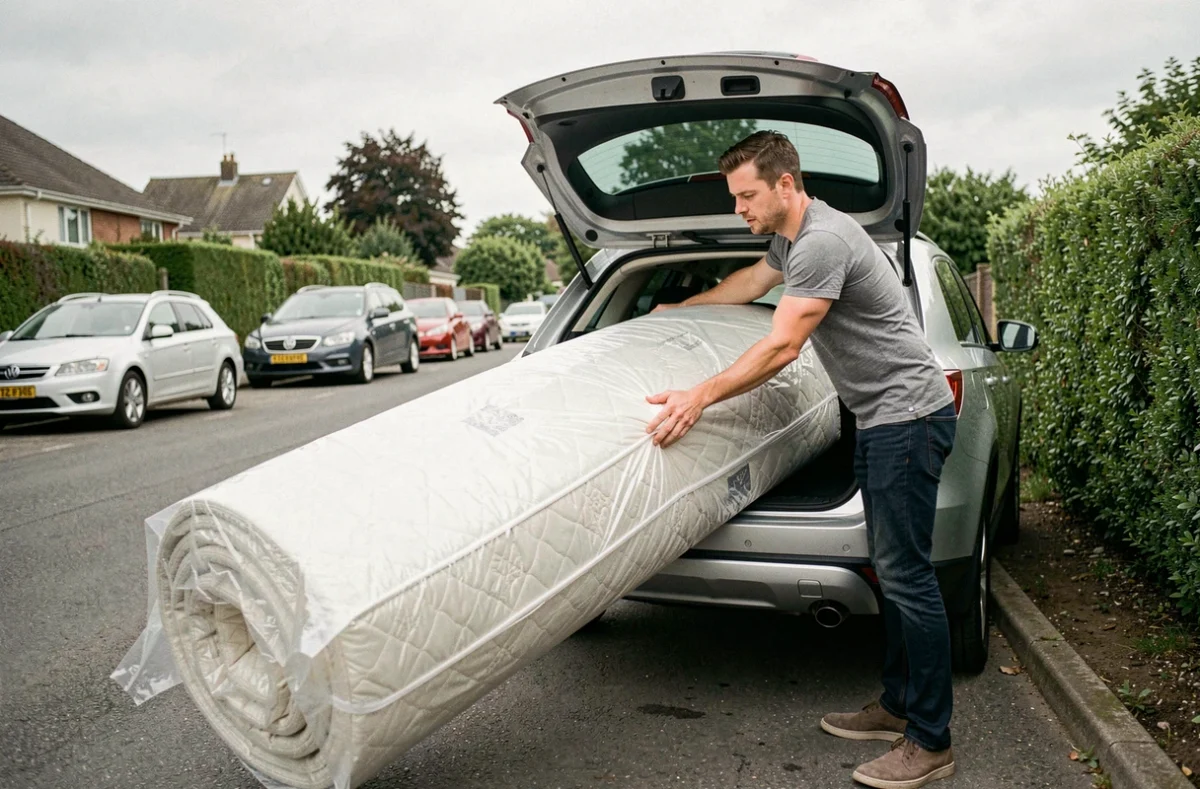
A rolled mattress sticking out of the trunk, a back seat turned into an obstacle, visibility reduced to nothing: this scenario is common when buying bedding or during a quick move. Transporting a rolled mattress in a car does require some simple precautions, both to preserve the mattress and to drive safely.
Payload and tire pressure: how the mattress affects your car
Before sliding anything into the trunk, check one point that most guides overlook: the remaining payload of your vehicle. This maximum allowed weight includes the weight of passengers, fuel, and cargo. A rolled foam mattress remains light, but if the trunk is already filled with boxes or if you are traveling with family, the margin can quickly shrink, especially in a small car.
The other reflex to adopt concerns the tires. A loaded trunk changes the weight distribution on the rear axles. The recommended pressure for a loaded vehicle is indicated on the label affixed to the door or in the manufacturer’s manual. Adjusting the tire pressure before the trip prevents vague handling in turns and reduces uneven wear. This check takes two minutes at the gas station and really changes the driving comfort.
You will find detailed steps for each type of mattress in this practical guide on Idylle Habitat, especially regarding precautions to take based on the foam density.

Rolled mattress in the cabin: securing a potentially projectile object
A mattress wedged between the back seat and the ceiling may seem well secured. In reality, during a sudden stop, it turns into a mass projected forward. The Highway Code requires that all cargo be secured so as not to obstruct driving or pose a danger.
Straps, retention net, or anchor points
The most reliable solution is to use the anchor points provided in the trunk or cabin. A strap wrapped around the rolled mattress and secured to the tie-down rings prevents any movement. If not, a retention net stretched between the rear headrests and the trunk serves the same purpose.
Avoid placing the mattress on the rear shelf without securing it. Even rolled and compressed, it can slide and hit a passenger or block the gear lever.
Rear visibility and mirrors
You may have noticed that a rolled mattress, even compact, easily obscures the rear window. Blocking this glass is not automatically prohibited, but one condition remains non-negotiable: the exterior mirrors must remain fully functional. The driver must maintain a sufficient field of vision for all maneuvers, including lane changes.
In practice, if your interior mirror becomes unusable, ensure that both side mirrors are properly adjusted before starting. A quick check in a parking lot is enough to adjust the blind spots.
Transporting a foam mattress without damaging it: the method that works
Not all mattresses can be rolled. Pocket spring models risk permanent deformation. Foam mattresses (polyurethane, memory foam, latex) tolerate temporary compression much better.
- Remove all bedding and lay the mattress flat on a clean floor before starting to roll it
- Roll from one end while gradually pushing out the air, without forcing the edges
- Secure the roll with two or three tight textile straps, not adhesive tape directly on the fabric
- Slide the rolled mattress into a thick plastic cover to protect it from moisture and friction during transport
The final diameter depends on the thickness and density of the mattress. A thin model rolls easily, while a thick high-density foam mattress will maintain a considerable diameter. Measure the opening of your trunk before you start.
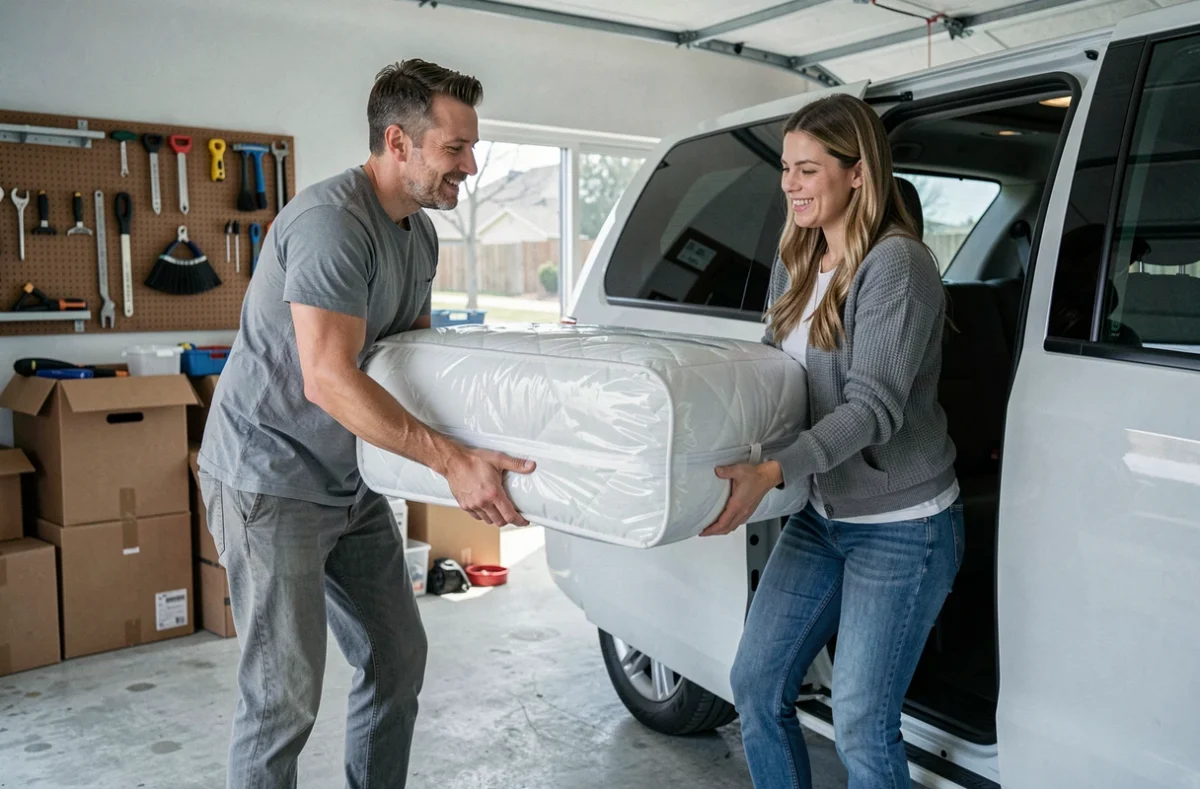
What vehicle to transport a rolled mattress without hassle
Are you driving a city car, a sedan, or an SUV? The answer changes everything. In a small car, folding the back seat flat remains the only realistic option to fit a standard-sized rolled mattress. Most recent vehicles offer a 60/40 fold that frees up enough length.
A station wagon or minivan offers a clear advantage with a longer and often lower loading floor. If you have a trailer, it’s even simpler, provided you cover the mattress to protect it from rain and secure it properly.
The roof rack option
Transporting a rolled mattress on the roof remains a last resort solution. Wind resistance increases fuel consumption, and the mattress must be securely strapped to the roof bars. Check the maximum load allowed on the roof of your vehicle in the manufacturer’s manual. This limit is often much lower than one might think.
Time to regain shape after transport by car
Once you arrive, do not sleep immediately on a mattress that has been compressed for several hours. The time to regain shape varies depending on the technology. A memory foam mattress needs a few hours to return to its original thickness. A cold foam model generally recovers faster.
Lay the mattress flat, remove the cover and straps, and then let it regain its volume in a ventilated room. Do not walk on it during the decompression phase to avoid creating uneven sagging areas.
Transporting a rolled mattress in a car is not complicated when you prepare: check the load, adjust the tires, secure properly, and give the mattress time to regain its shape. These few actions prevent both unpleasant surprises on the road and a deformed mattress upon arrival.