A fashion trend refers to a stylistic movement adopted by a critical mass of creators and consumers over one or two seasons. For the autumn-winter 2026-2027, these movements are no longer limited to the runways: they now incorporate regulatory constraints and a different relationship to the sustainability of clothing. Understanding what is at play behind each key piece allows for more precise clothing choices.
Sustainability coefficient and textile penalty: what the law changes for your wardrobe
Since 2026, France has implemented a specific legal framework for ultra-fast fashion. A penalty targets new textile products launched by brands whose range renewal exceeds a certain threshold.
The mechanism is based on a sustainability coefficient. Products that receive a score of 0.8 or lower may face financial penalties. This coefficient takes into account a brand’s range breadth and its incentives for repair.
To follow fashion trends on Les Conseils de Mélanie while considering this new framework, prioritizing robust pieces and tighter collections becomes a logical reflex. The law encourages brands to produce fewer references but with better longevity.
Second-hand items are explicitly exempt from this system: only new clothing is affected. Buying a trendy second-hand piece, having it altered, or customizing it remains an option free from any penalty. Comparing new purchases and second-hand for the same item thus takes on a new economic meaning, beyond just an ecological approach.
Patterns and prints autumn-winter 2026: checks, animal prints, and the return of stripes
Patterns structure the silhouette as much as the cut. This season, three families of prints dominate the collections and searches.
Prince of Wales checks and revisited tartan
Checks remain a classic for autumn, but the 2026 proposals expand the scales. We see oversized checks on mid-length coats and straight skirts, where previous seasons confined the pattern to blazers. Tartan, on the other hand, migrates towards muted palettes (burgundy, forest green, slate gray) that move away from the folkloric register.
Animal prints: from leopard to snake
Animal prints have never really disappeared, but their treatment is changing. Snake prints on satin fabrics and tone-on-tone leopards on thick knits replace the garish versions. The idea is to use animal prints as a textured neutral rather than as a statement piece.
Vertical stripes on knits and shirts
Vertical stripes are making a comeback on oversized sweaters and shirts. Their practical interest is real: a vertical stripe elongates the silhouette without cutting effort. On a chunky knit sweater, the pattern breaks the heavy effect that thick knitwear can give.
Key materials of the season: faux fur, boiled wool, and plant-based leather
The choice of material determines the longevity of a garment and its everyday comfort. Three materials are in the spotlight this autumn-winter.
- Long pile faux fur: present on short jackets and removable collars, it is gradually replacing real fur in mainstream collections. Its density varies by range, which directly affects its longevity.
- Boiled wool: this felted material, resistant to wind and light rain, is back on straight coats and overshirts. It lends itself well to repairs (mending snags, replacing buttons) and fits into the sustainability logic encouraged by the new regulations.
- Plant-based leather (made from cactus or mushroom): still a minority in volume, it is gaining visibility in accessories (bags, belts, gloves). Its flexibility is improving, although its abrasion resistance remains lower than that of animal leather on heavily used pieces.
Colors autumn-winter 2026: from deep burgundy to butter yellow
The season’s palette contrasts dark, enveloping shades with a few bright bursts that serve as accents.
Deep burgundy emerges as the dominant color of autumn-winter 2026. It can be found on wide trousers, ribbed knits, and ankle boots. Its strength lies in its compatibility with black, gray, and beige, three staples already present in most wardrobes.
Butter yellow, which first appeared in spring-summer, continues in an autumnal version on scarves, beanies, and lightweight sweaters worn as mid-layers. Its visual warmth offsets the neutrality of dark coats.
Sage green and petrol blue complete the range. They work particularly well on textured materials (corduroy, boucle wool) where the depth of color varies with the light.
Trendy silhouettes and cuts: wide trousers, midi skirts, and layering
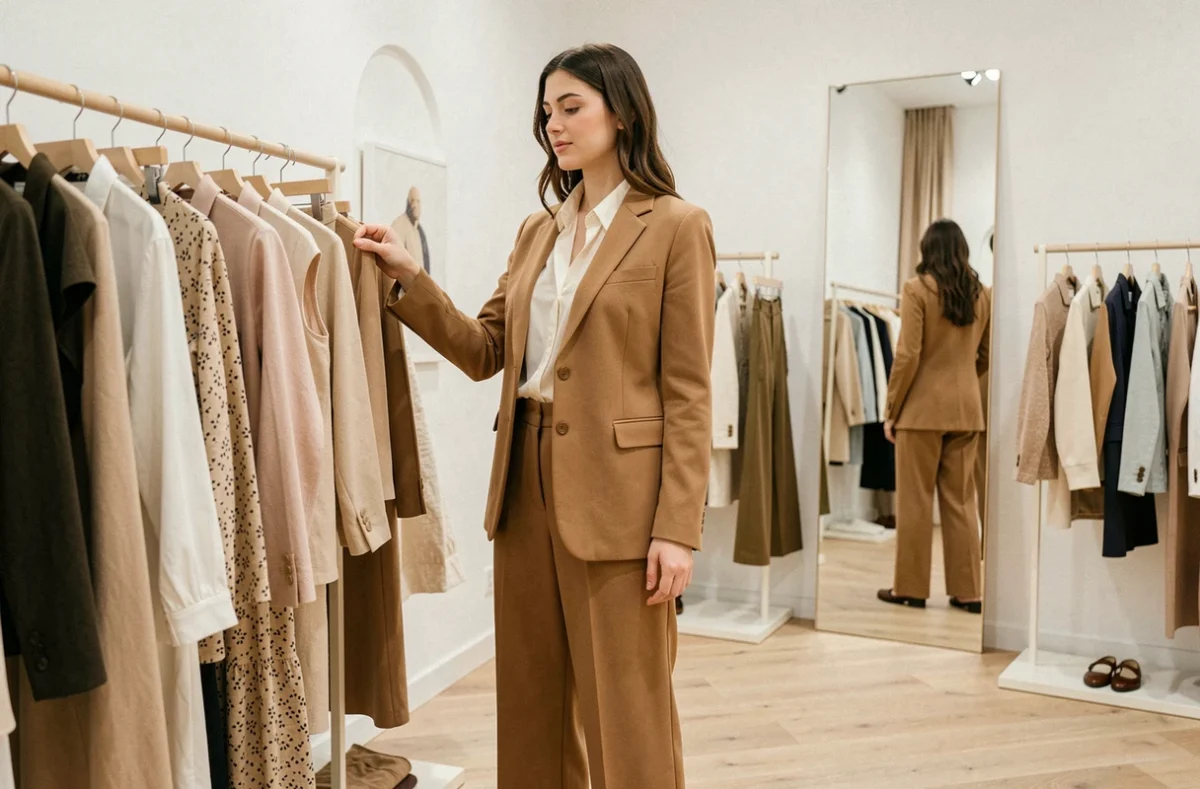
The wide pleated trousers remain the key cut for bottoms. Worn with block-heeled ankle boots, they create a fluid line that balances the volumes of structured jackets. The midi skirt, straight or slightly flared, offers an alternative for the same occasions.
Layering structures the silhouettes of the season:
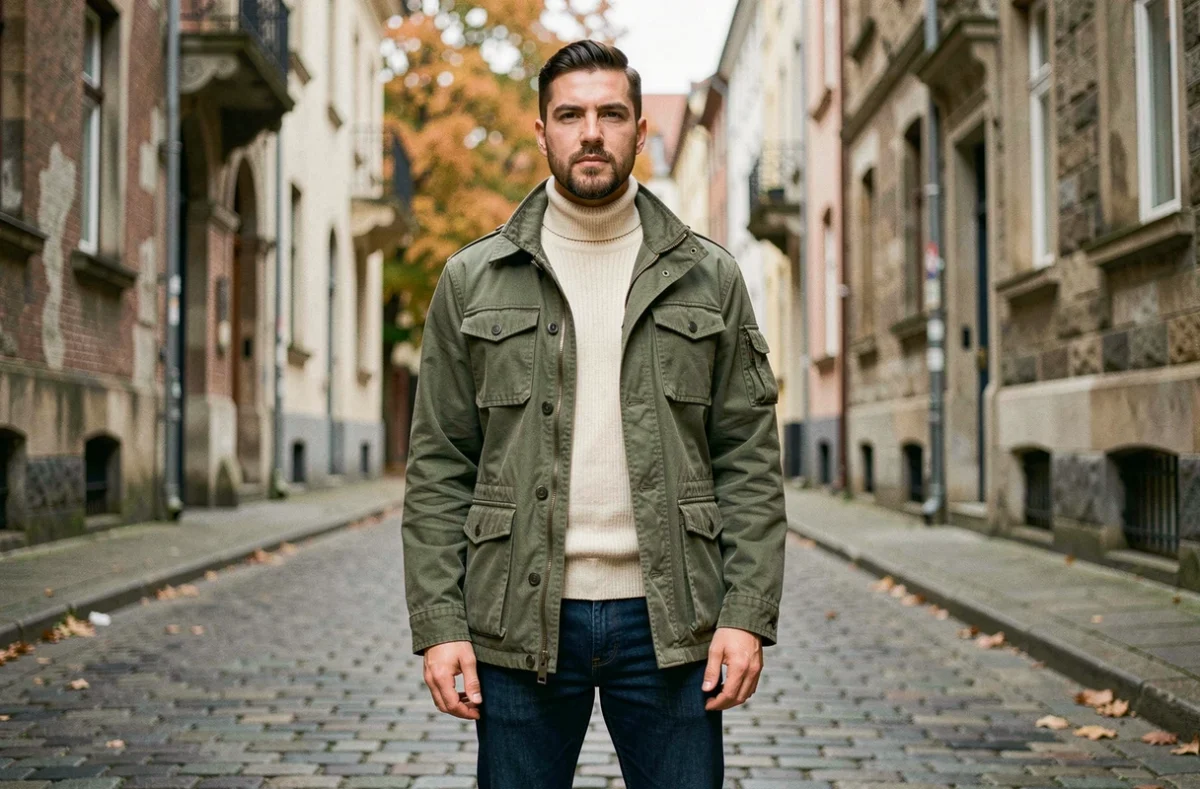
- A fine turtleneck under an open shirt, itself under a blazer or boiled wool overshirt
- A sweater dress worn over slim trousers, with a straight coat on top
- A long sleeveless vest over a total monochrome look to break the verticality
This layered approach allows for adapting an outfit to the temperature variations of a single day while creating visual depth.
The trends of this season share a common point: they reward wardrobes built around durable and versatile pieces. The textile penalty, the rise of second-hand, and the return of solid materials like boiled wool converge towards a fashion where each purchased garment must justify its place in the long term.