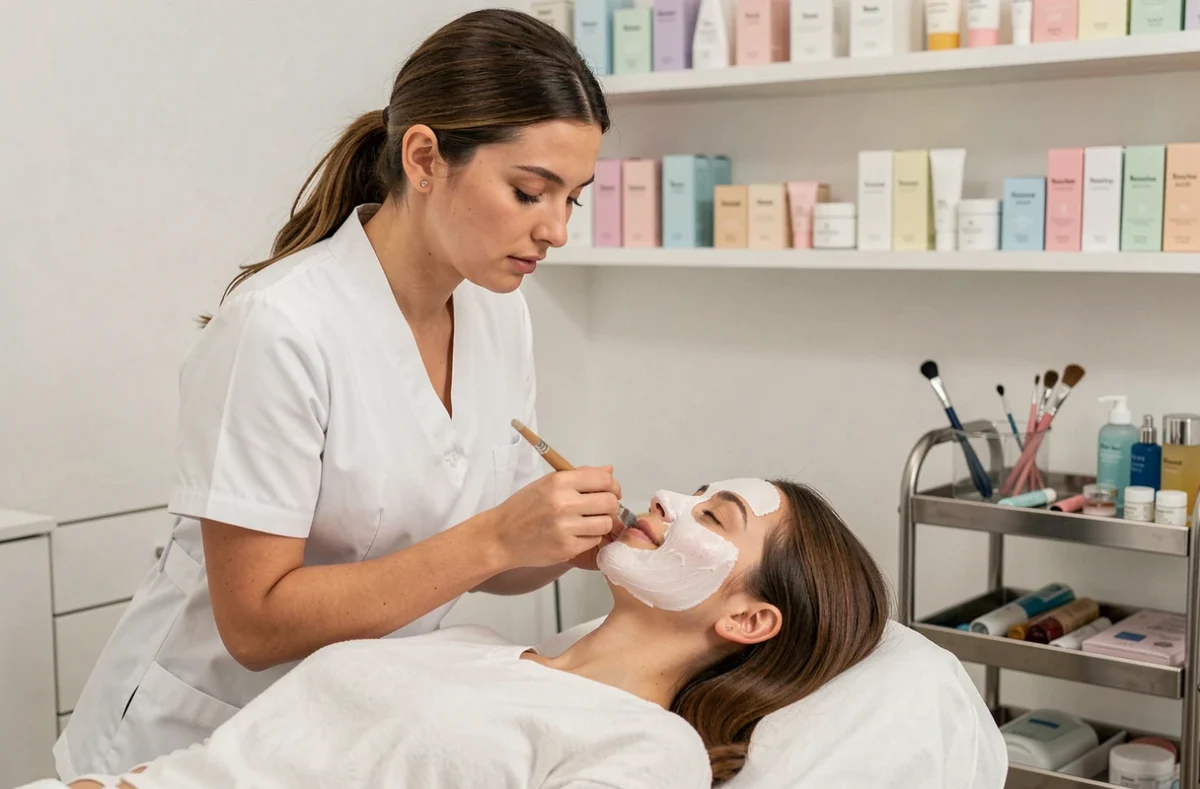
Someone finishing a CAP and looking to open their own home-based beauty salon has different needs from an employee changing careers who wants to work at a hotel spa. The basic qualification is the same, but the training pathway, its duration and its cost vary depending on the actual career goal.
Choosing a beauty therapy course without first clarifying your practical goals risks paying for unnecessary modules or, conversely, finding yourself unable to perform certain treatments because you lack the required qualifications.
CAP, BP or BTS in beauty therapy: which qualification suits your career plans?
The CAP Esthétique Cosmétique Parfumerie remains the only mandatory qualification for working in the field. It can be completed in two years after middle school, in one year by those who already hold another qualification, or even as an independent candidate. It qualifies you to provide basic facial treatments, hair removal and makeup services.
A CAP is sufficient to work as an employee in a traditional beauty salon. You can start working as soon as you graduate and build your skills on the job. However, if your goal is to manage a salon (whether as an employed manager or on your own account), the Brevet Professionnel Esthétique Cosmétique Parfumerie offers a practical advantage: it covers body treatments and UV services in greater depth and includes business management training.
Choosing a beauty therapy course to become a beauty therapist may also involve a BTS Métiers de l’Esthétique Cosmétique Parfumerie, a two-year qualification taken after the baccalauréat. It is designed for three distinct career paths: salon management, training and working for beauty brands, or cosmetology. A BTS is not essential for opening a salon, but it can be a good choice if you want to work for a cosmetics manufacturer or manage a team at a large chain.
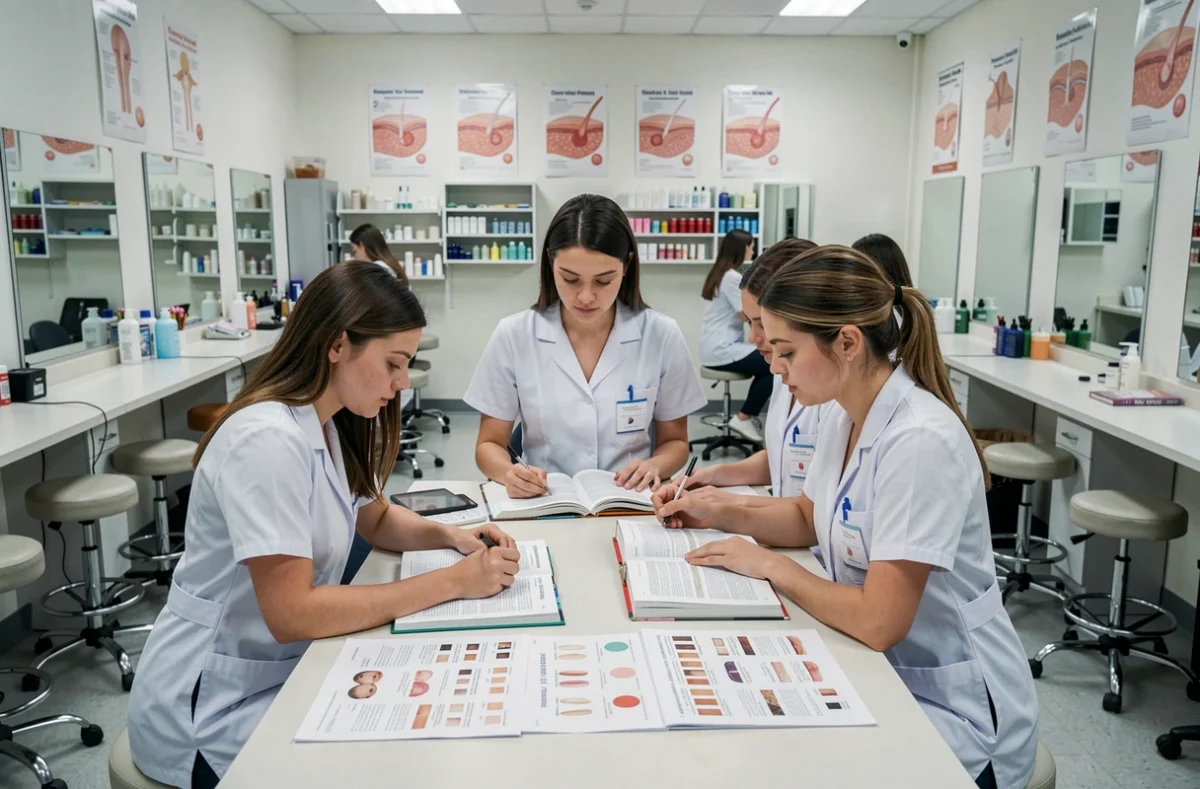
Working in a salon, at home or in a spa: tailor your training to your workplace
Where you plan to work affects which training content to prioritise. Working in a local beauty salon, offering treatments at home or joining a high-end spa calls for different skills and additional certifications.
Working in a salon or chain
The CAP covers the treatments offered at most beauty salons. Franchise chains provide in-house training on their own protocols. With a BP, you can qualify for a salon manager position sooner.
Starting a home-based business
Working from home requires the same minimum CAP qualification, but the practical realities are different. You have to manage client relationships, bookkeeping and compliance with hygiene standards in a private space on your own. No qualification specifically prepares you for providing beauty treatments at home: supplement your CAP with a short course in running a micro-business and check your professional insurance requirements.
Aiming for a spa or thalassotherapy centre
Hotel spas and wellness centres often recruit candidates with a BP or a CQP (Certificat de Qualification Professionnelle) Spa Praticien. Their protocols include full-body treatments, massage and hydrotherapy, which are not covered by the CAP alone. A post-CAP specialisation in spa treatments lasting a few months is the most direct route.
Beauty therapy course costs and funding options
Training costs vary considerably depending on the format you choose, and this is something many candidates underestimate at first.
- At a public vocational high school, the CAP is free (excluding supplies and personal equipment). This is the least expensive option for under-18s or jobseekers referred by their employment adviser.
- At a private school, a one-year CAP course generally costs several thousand euros. Fees vary depending on the city, the school’s reputation and whether equipment is included in the price.
- With an apprenticeship, the employer’s OPCO covers the cost of training. Apprentices are paid and do not pay tuition fees, making this the most financially advantageous option.
- For continuing education for adults, the CPF (Compte Personnel de Formation) can cover all or part of a CAP or BP, provided the course is eligible and delivered by a Qualiopi-certified training provider.
The amount of work experience or practical training included in the course is another factor to compare. A CAP at a vocational high school includes several weeks of mandatory work placement, while some accelerated courses at private schools offer fewer hours of hands-on experience. Yet it is on the job that you learn how to manage treatment-room time and build client relationships.
Access to regulated techniques: what each qualification level allows
Not all techniques are available at every training level, and regulations strictly govern certain practices.
Basic facial treatments, hair removal (excluding laser), makeup and simple manicures are covered by the CAP. Only doctors may use intense pulsed light or laser devices, regardless of their beauty therapy qualifications. This is a common misconception among candidates who think a BTS or private certification is enough to perform permanent hair removal.
UV treatments require a specific training certificate, which is mandatory for anyone providing tanning booths. The BP includes this training in its curriculum. Nail extensions, microblading and eyelash extensions are not covered by a state qualification, but private certifications are available and increasingly sought after by clients concerned about safety.
Before enrolling in additional training in advanced techniques, check that the training centre is properly certified and that beauty therapists are legally allowed to perform the technique in question. A qualification does not automatically give you the right to perform every beauty treatment: regulations take precedence over the training curriculum.
Choosing a beauty therapy training pathway depends less on the prestige of the qualification than on how well the course matches your intended workplace and the treatments you want to provide day to day. Comparing the practical hours included, the actual cost after funding and the treatments permitted at each qualification level is the most reliable way to avoid unpleasant surprises once you start working.