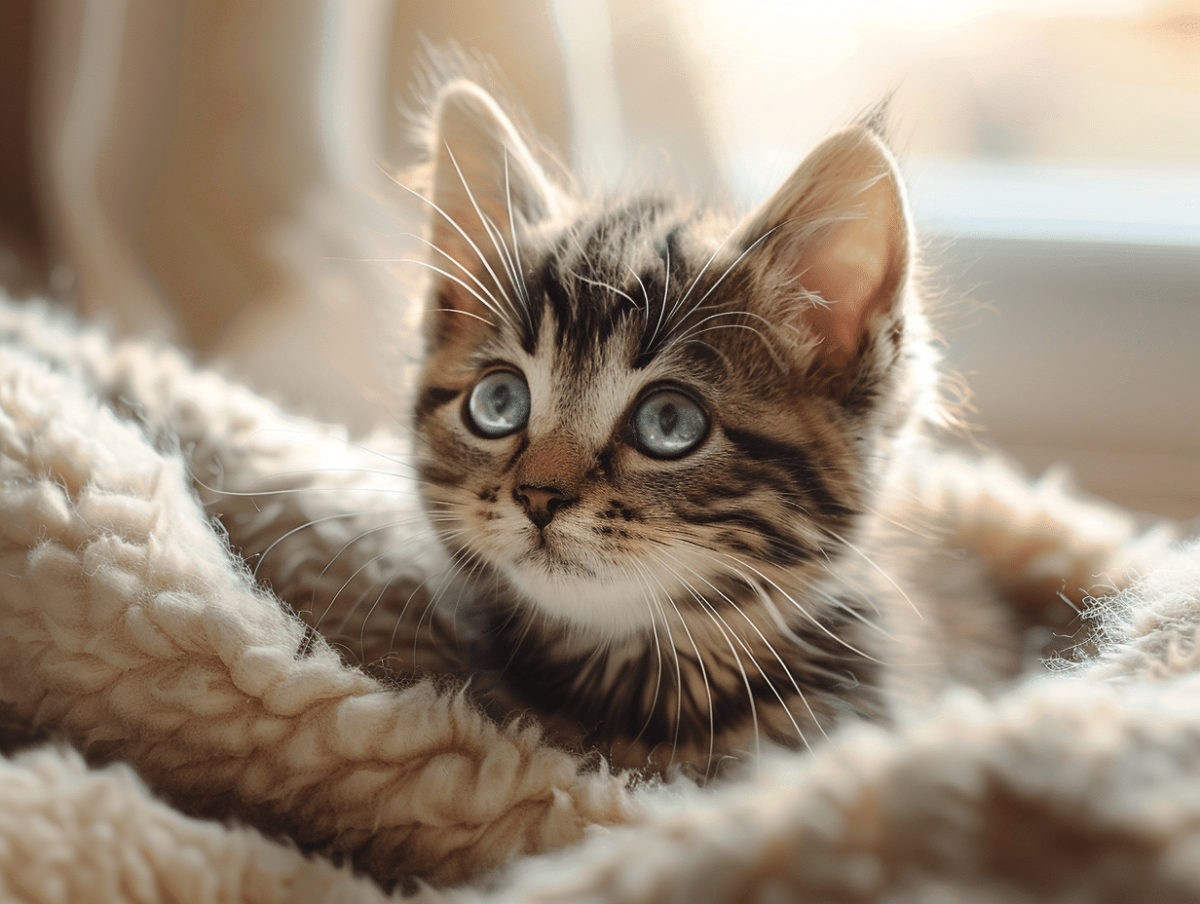
Kittens are all born with blue eyes, a characteristic that intrigues and fascinates many cat lovers. This initial hue is due to the absence of melanin, the pigment responsible for the coloration of the iris. Over the weeks, the eyes of kittens undergo a remarkable transformation.
Around six to eight weeks of age, the first color changes are observed. Pigments begin to develop, revealing various shades ranging from green to brown, including amber. Each kitten then becomes a unique individual, with eyes that reflect its genetics and lineage.
The first weeks: the evolution of eye color in kittens
The first weeks of a kitten’s life are crucial for the evolution of its eye color. From birth, kittens display a blue gaze, a hue due to the absence of melanin in the iris. This absence of pigment is temporary, and the process of change begins quickly.
The stages of transformation
- Between the third and eighth week: melanin begins to deposit in the iris.
- Around six to eight weeks: the first shades of the final color appear.
- At eight weeks: kittens reach their final vision.
Melanocytes, specialized cells located in the iris, produce melanin. This pigment, gradually depositing, transforms the initial blue eyes into a variety of colors.
Influences and varieties of colors
The amount and distribution of melanin determine the final shade of the eyes. Colors can range from green to brown, including shades of amber. Some kittens display yellow or green eyes, while others, like Siamese and Persian breeds, often retain blue eyes into adulthood. The phenomenon of blue-eyed kittens is therefore a transitional phase, marked by a rapid and fascinating evolution of eye color. This transformation is a key indicator of the health and development of young felines, reflecting their genetics and physical development.
Factors influencing the final eye color of kittens
The evolution of eye color in kittens is not solely dependent on melanin. Several other factors play a fundamental role in this process.
Genetics and cat breeds
Genetics remains the primary determinant of the eye color of kittens. Certain breeds, such as Siamese and Persians, retain their blue eyes into adulthood. Other breeds, such as Maine Coons or Cornish Rex, exhibit a variety of shades ranging from green to yellow. The genetic diversity within cat breeds directly influences the final shade of the eyes.
Health issues
Health issues can also affect eye color. A sudden change in hue may signal an underlying disease. For example, inflammation or infection of the eye can lead to a change in color. Veterinarians recommend closely monitoring any alterations to diagnose and treat potential pathologies promptly.
Heterochromia
Heterochromia is a rare condition in which a kitten has eyes of different colors. This phenomenon can be genetic in origin or result from an injury. Although heterochromia is often harmless, it can sometimes indicate more serious health problems.
The factors influencing eye color in kittens are numerous and varied, intertwining genetics, health, and individual peculiarities. Understanding these elements allows for a better grasp of the development and well-being of our feline companions.