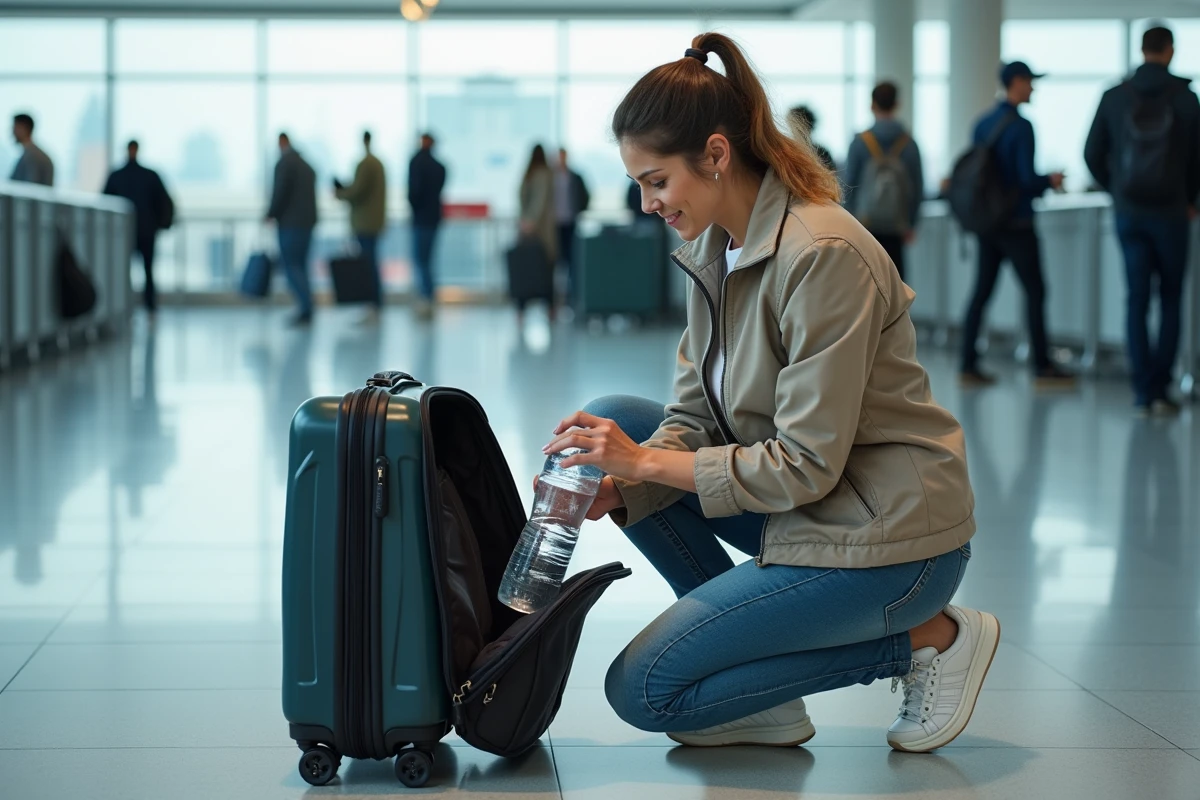
A liter of water has a different fate depending on whether it slips into a checked suitcase or tries its luck in the cabin. Where the hold allows the bottle to pass without a second thought, the cabin imposes its iron rule: 100 milliliters maximum per container. The only escape route is purchases after security control: duty-free liquids, properly sealed in their regulatory bag, can board without discussion.
This strict framework meets a dual requirement: ensuring safety on board and not sacrificing the comfort of travelers, especially on long journeys where access to water remains a very real concern.
What the regulations stipulate: cabin and hold, two separate worlds
Everything hinges on a detail that changes everything: the place where you store your bottle. In the cabin, the 100 ml rule applies without exception: each bottle must not exceed this limit, tucked into a transparent, resealable plastic bag with a maximum capacity of one liter. This constraint is expected at security control, a ritual that every passenger knows. It is impossible to bring standard mineral water on board unless it comes from duty-free after the checks, properly sealed according to regulations.
In the hold, the logic changes radically. No need to deprive yourself: the famous 100 ml rule no longer applies. Whether your water bottle holds one liter or more, it can join your suitcase as long as it is hermetically sealed and does not cause any leaks. An important detail: baggage weight limitations apply here. Some countries add sanitary or customs barriers upon arrival, a detail that is often overlooked.
To dispel doubts, the site bottle of water in checked luggage gathers the current rules, with explanations to support them. It is best to refer to it before preparing your bag, especially if your destination applies its own filters upon arrival.
Can you really transport a water bottle in the hold during a flight?
This question stirs many travelers. In theory, slipping a water bottle into your checked suitcase poses no problem. The constraints that apply to the cabin do not cross the threshold of the hold. No matter the volume, whether it is a small 50cl or a family-sized bottle, as long as the cap stays secure and the item is not likely to spill on your belongings.
However, you must play by the rules of the airlines: each carrier sets a maximum weight and size for luggage that must not be exceeded. An overloaded bag quickly ends up on the scale, and the bill can reflect that. A quick look at the boarding conditions of the airline and the legislation of the destination country avoids unpleasant surprises, as some destinations refuse the importation of certain waters or impose a declaration.
Packing your bottle: precautions that make all the difference
To limit the risk of leaks or breakage during transport, you can rely on three simple principles:
- Choose a hard suitcase that absorbs shocks better than soft models.
- Protect the bottle in a waterproof plastic bag, double it if possible.
- Place it in the middle of the suitcase, wrapped in clothes to cushion shocks and reduce the risk of crushing.
The essential thing: properly seal the water bottle. At the airport, any container that is not securely closed is likely to be removed from the suitcase as a precaution, with no appeal possible.
Flying and staying hydrated: solutions, exceptions, and practical tips
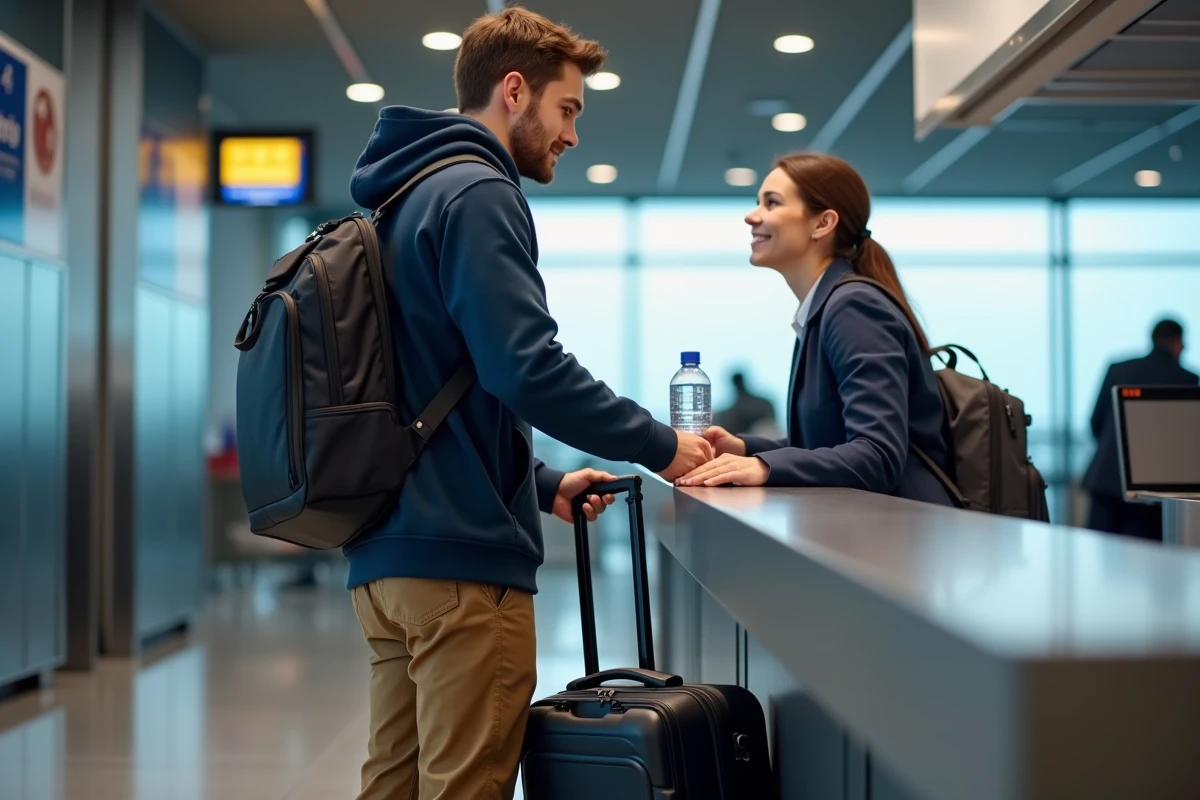
The ban on full bottles in the cabin does not require traveling dehydrated. The obvious workaround: bring an empty bottle or a reusable water bottle, which are accepted at security control. Once in the boarding area, a quick stop by a fountain or tap allows you to fill it up as needed, without extra cost or waste. Many travelers today prefer these foldable or insulated models, suitable for long flights and compatible with local water, provided they trust the supply. In some countries, using a filtering bottle has even become a reflex to ensure drinking water.
There are a few special cases: a prescription or a medical certificate allows you to bring the amount of water necessary for your treatments in the cabin, even beyond 100 ml. Similarly, baby food passes the security barrier, including milk and sterilized water, as long as the quantities remain justified. For four-legged companions, prior declaration to the airline determines access to water during the flight: each carrier has its own rules.
If the regulations are not respected, the penalty is simply: confiscation at security, never a fine. For those who prefer to simplify, buying a bottle after security, in the duty-free area, remains the most straightforward solution, as these sealed containers are accepted on board even if they exceed the usual limit. By 2025-2026, the evolution of scanners promises to change the game, but for now, it is better not to tempt fate with an overly full bottle in the cabin.
Once the suitcase is retrieved from the carousel, the question no longer arises: water bottle or not, thirst can still wait, the journey continues.